
 View larger
Jean-François HUE (1751 - 1823)
Demande d'informations
| Oil on canvas |
| 64,5 x 54 cm |
| Signed “hue” lower left |
| Circa 1790 |
More info
Noticed early on by Joseph Vernet for his talent in drawing, he also studied under Gabriel-François Doyen before joining Vernet’s studio, where he became one of the most talented students. This training had a lasting influence on his work, both in his penchant for observing nature and in his interest in coastal landscapes and maritime scenes.
Admitted to the Royal Academy of Painting and Sculpture in 1782 with a *View Taken in the Forest of Fontainebleau*, Hue went on to have a brilliant official career. In 1786, Louis XVI commissioned him to paint two works celebrating the French naval victories of the American War of Independence. A few years later, in 1791, the Constituent Assembly entrusted him with completing the prestigious series *Views of the Seaports of France*, begun by Joseph Vernet in 1753 and left unfinished. Between 1792 and 1798, he produced several views of the ports of Brittany, which are now among his most representative works.
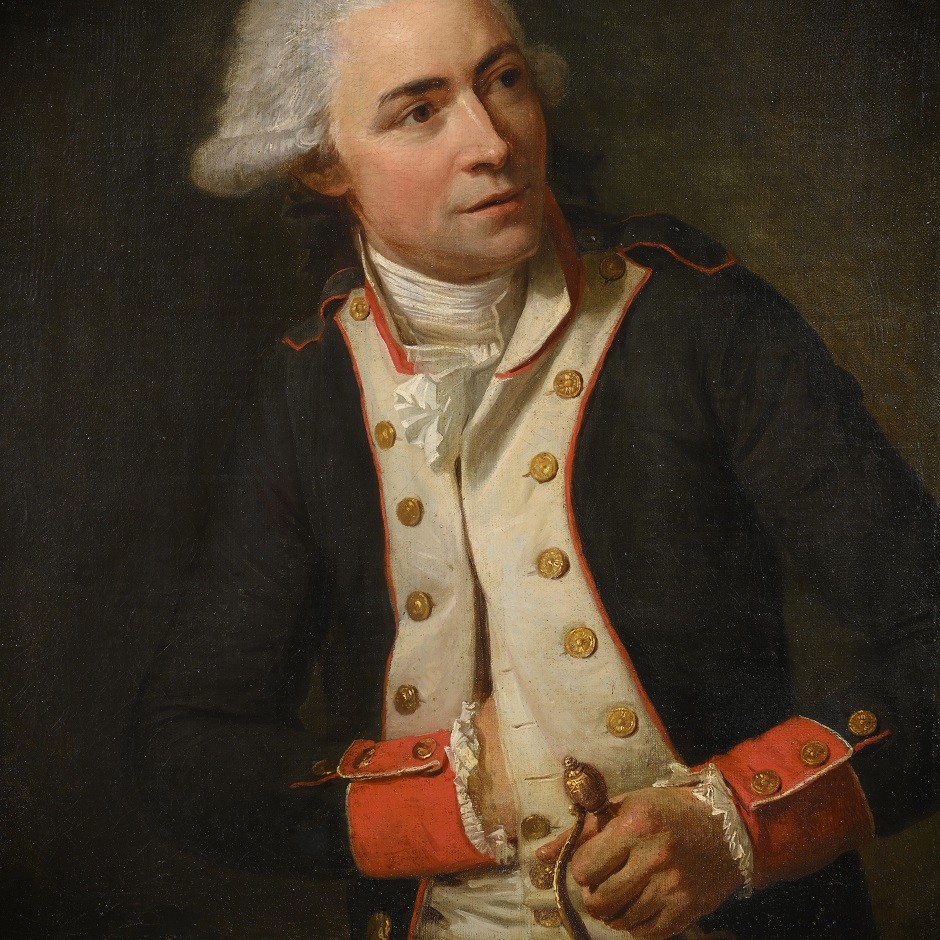
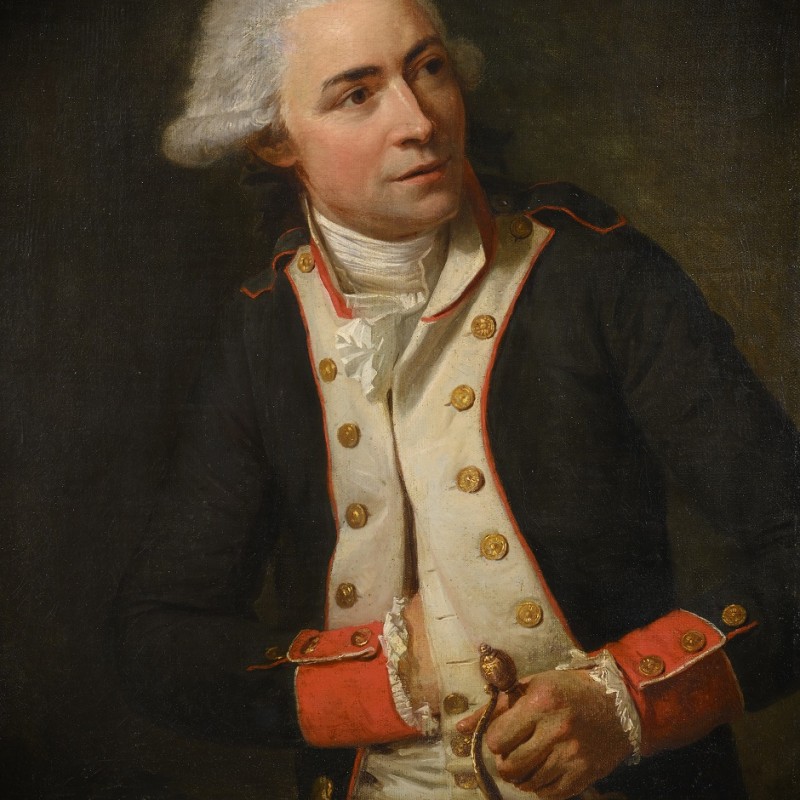
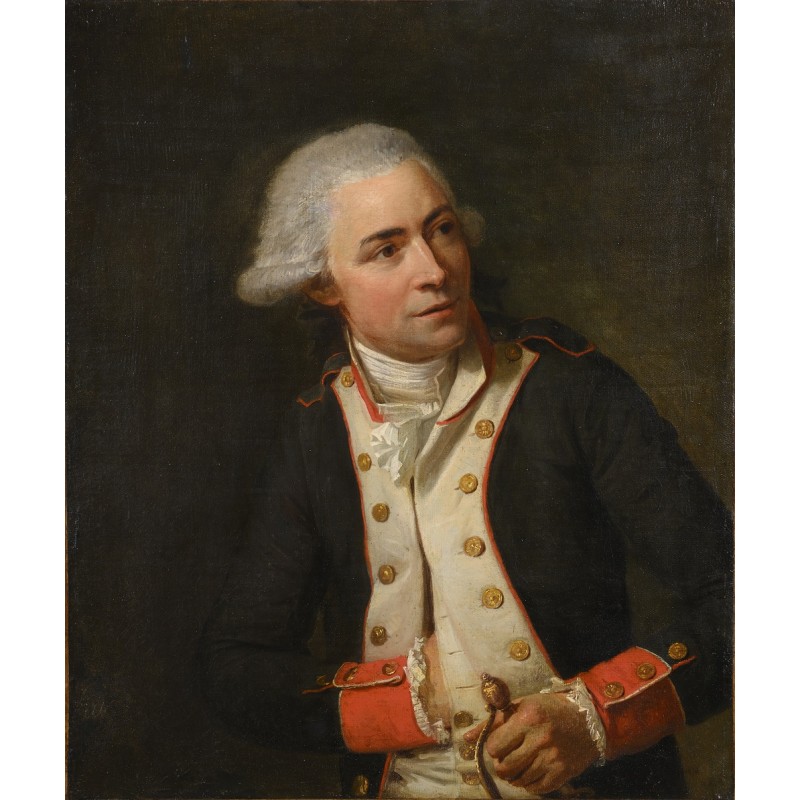
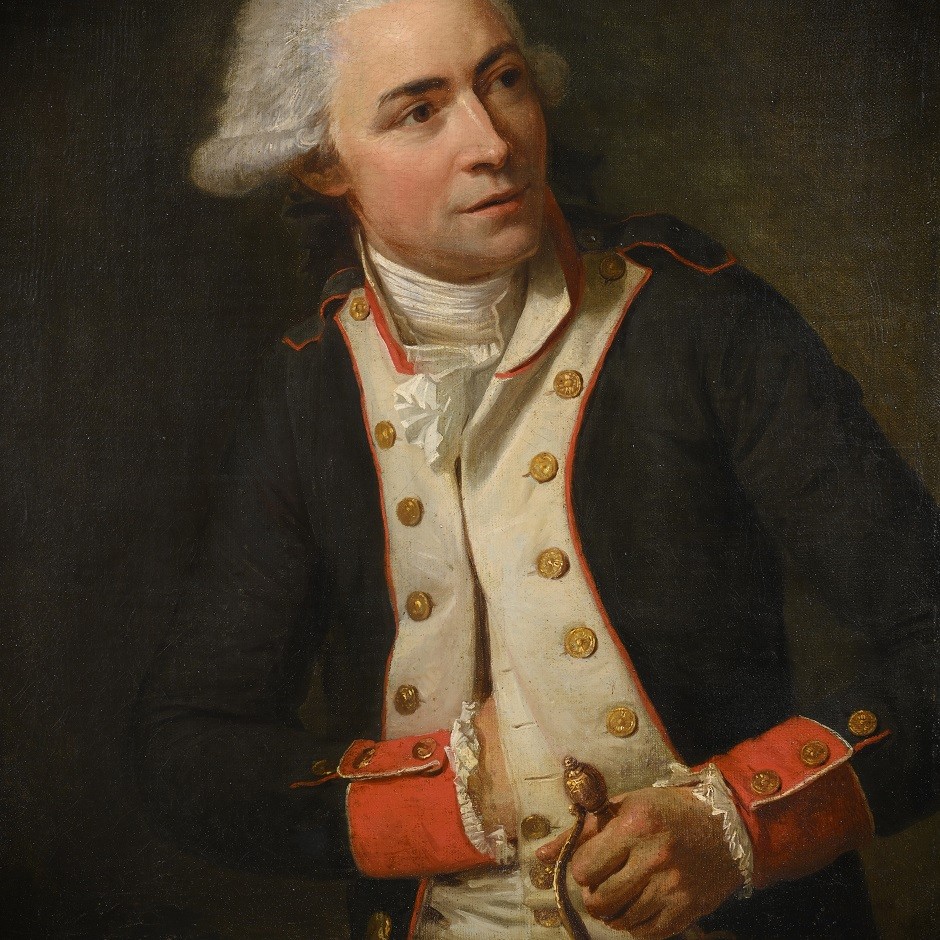
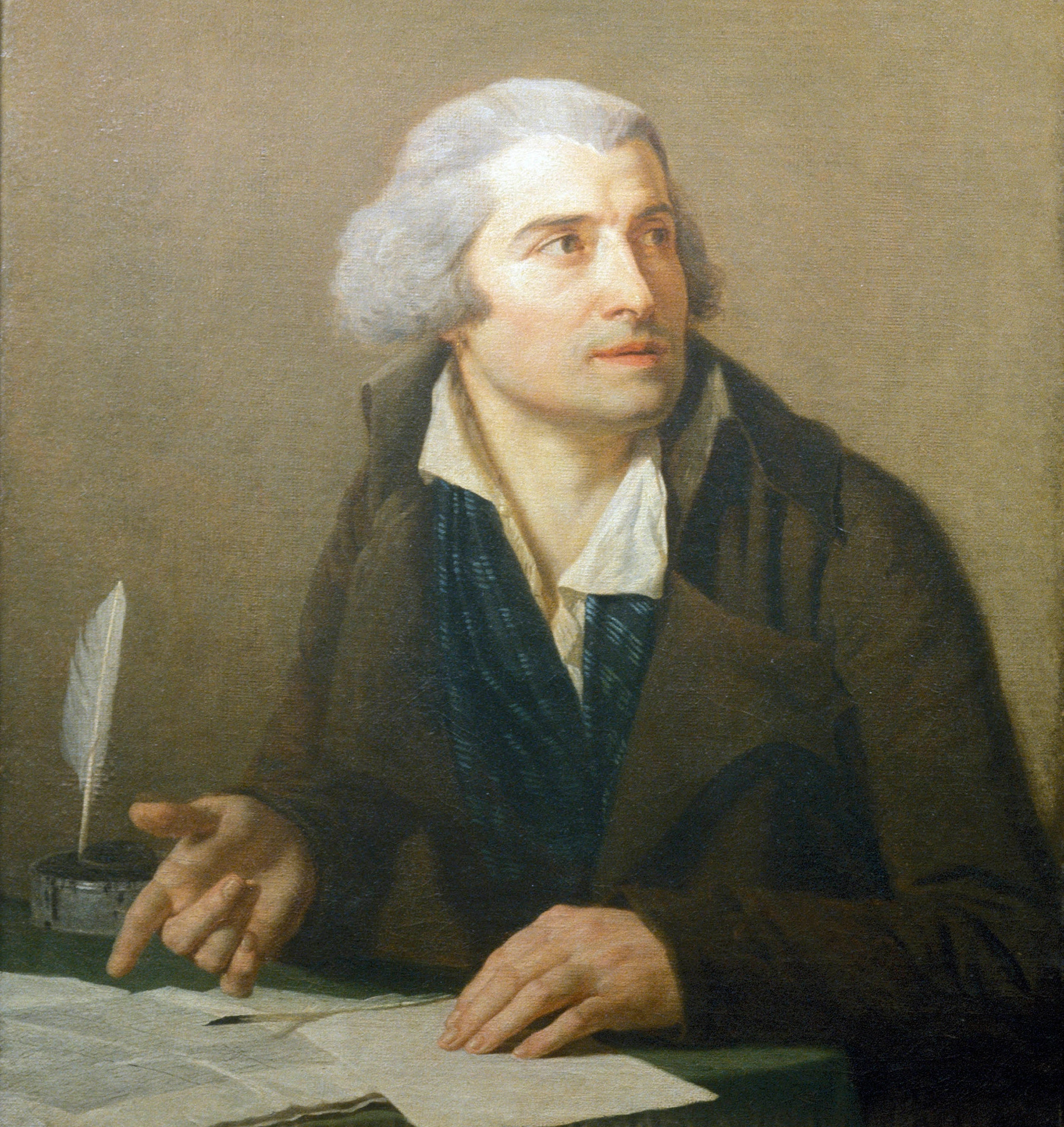
His work as a portrait painter, however, remains much less well known. The few portraits identified today nevertheless attest to his remarkable talent. This painting is part of that limited body of work, characterized by a subdued color palette, a three-quarter-length composition facing slightly to the right, the subject looking away from the viewer, and particular attention to detail in the depiction of the hands—an area in which he excels. These same characteristics are notably found in the *Portrait of Marie-Joseph Chénier*, held at the Detroit Institute of Arts.
This portrait, painted around 1790, depicts a man in his thirties wearing his National Guard uniform. Formed in the aftermath of the storming of the Bastille in July 1789, this military unit was a citizen militia composed of volunteers tasked with maintaining public order and defending the gains of the Revolution. Placed under the command of the Marquis de La Fayette, it quickly became one of the symbols of the new political order and civic engagement.
Ill. 1
Avis
Aucun avis n'a été publié pour le moment.