
 View larger
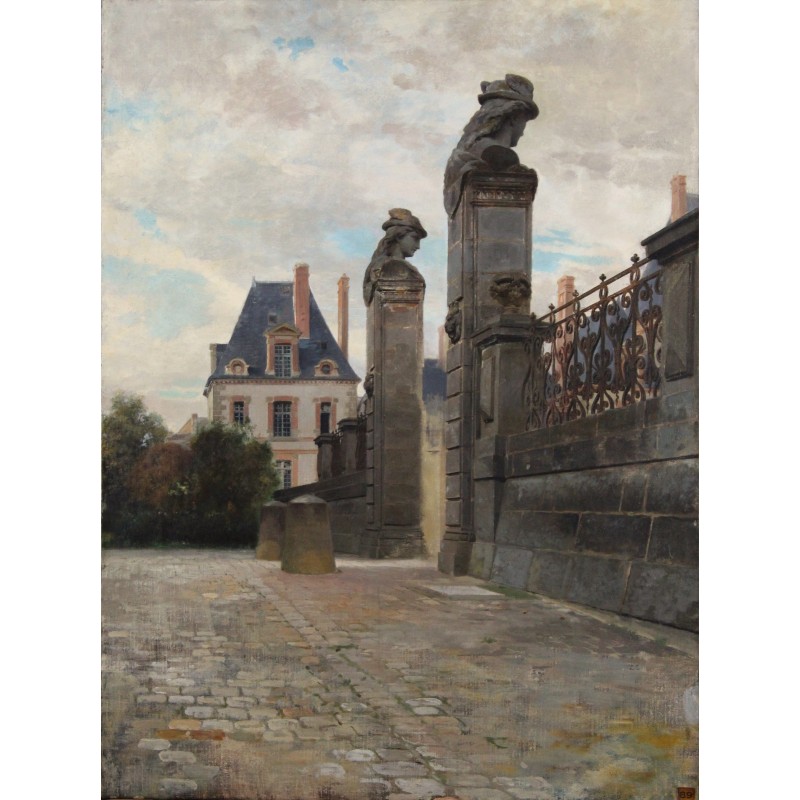
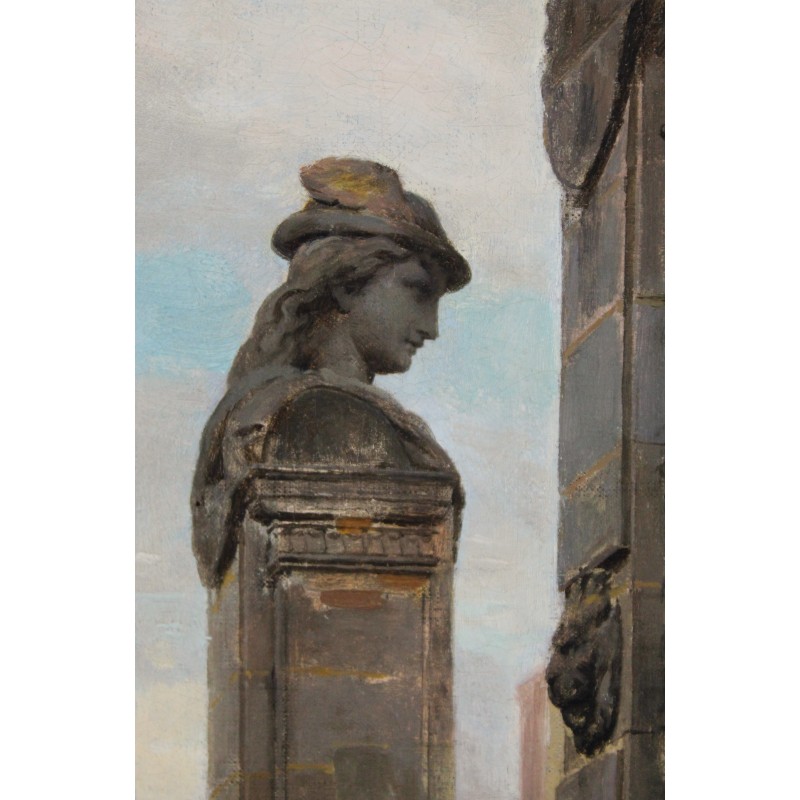
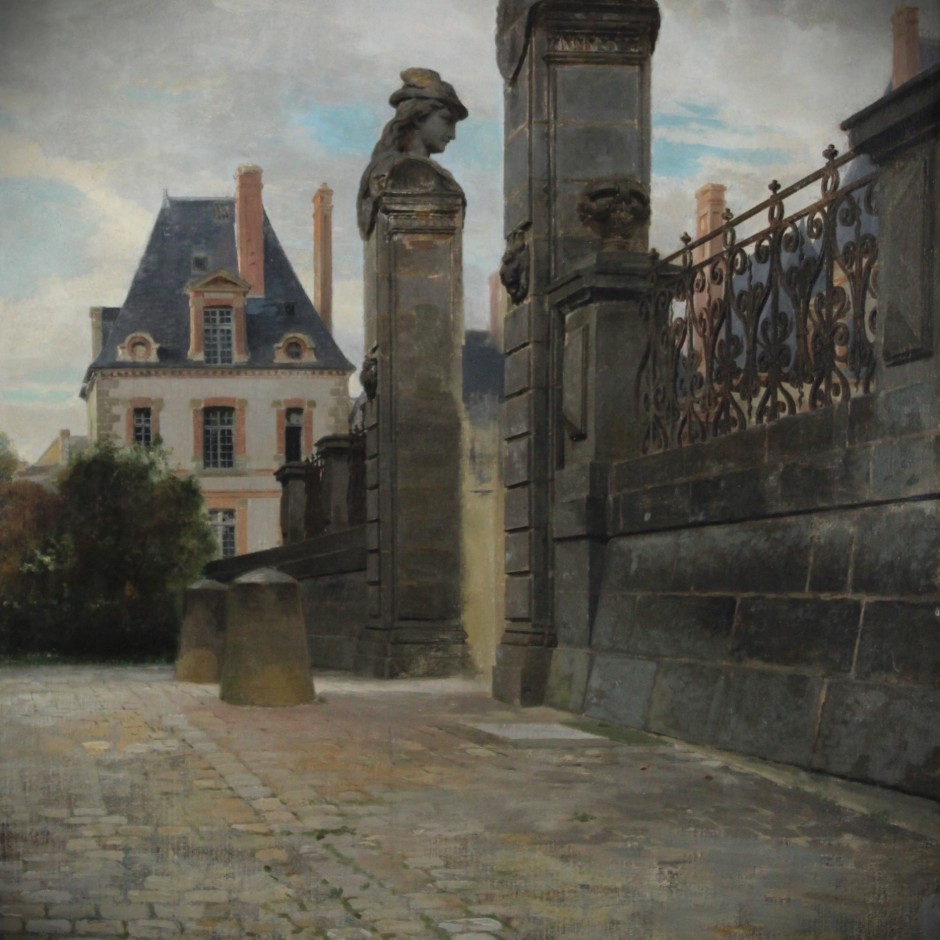
Hermes Gate at the Palace of Fontainebleau
Demande d'informations
| Huile sur toile |
| 65 x 48,5 cm |
| Circa 1860 |
More info
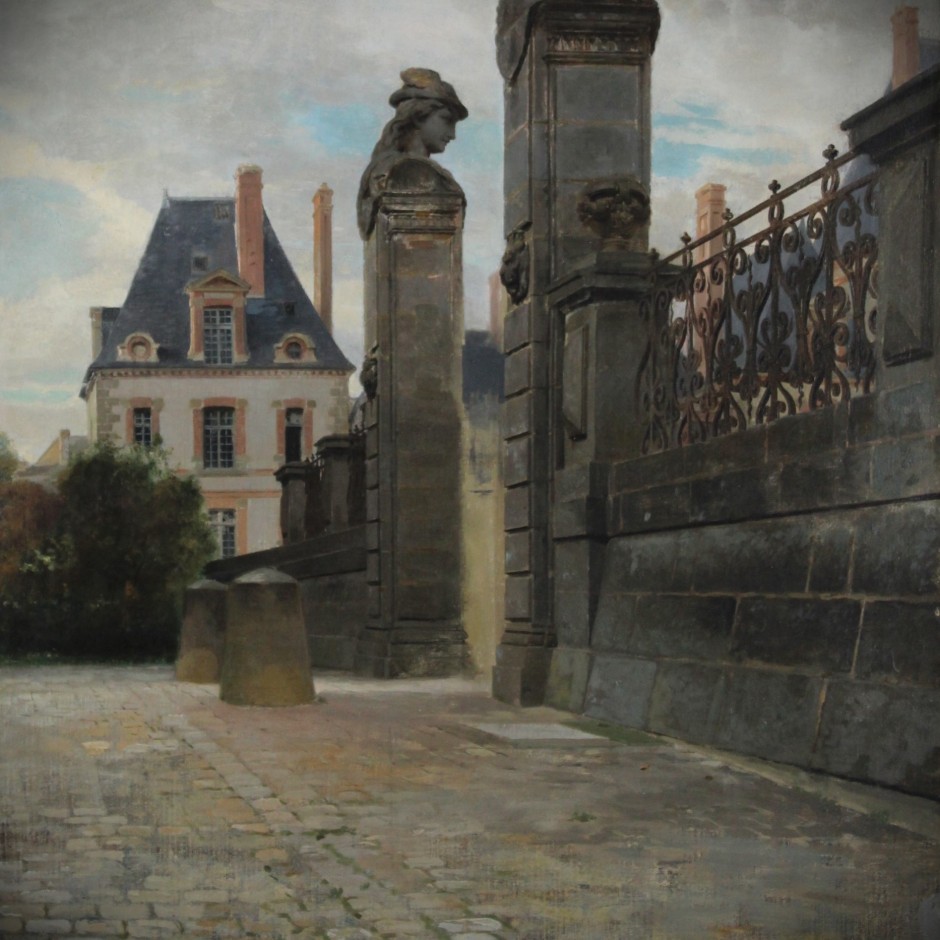
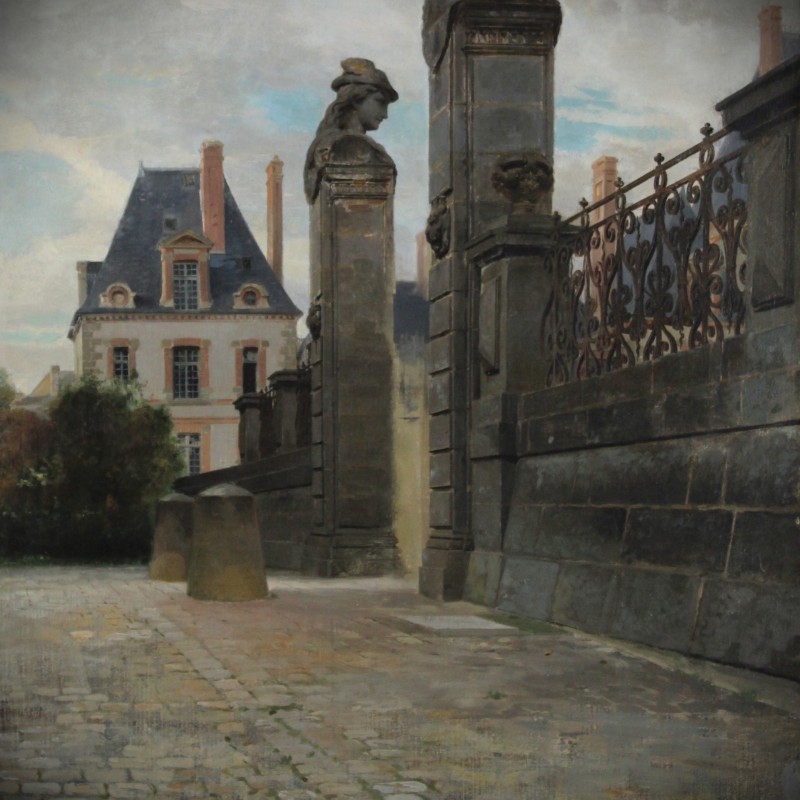
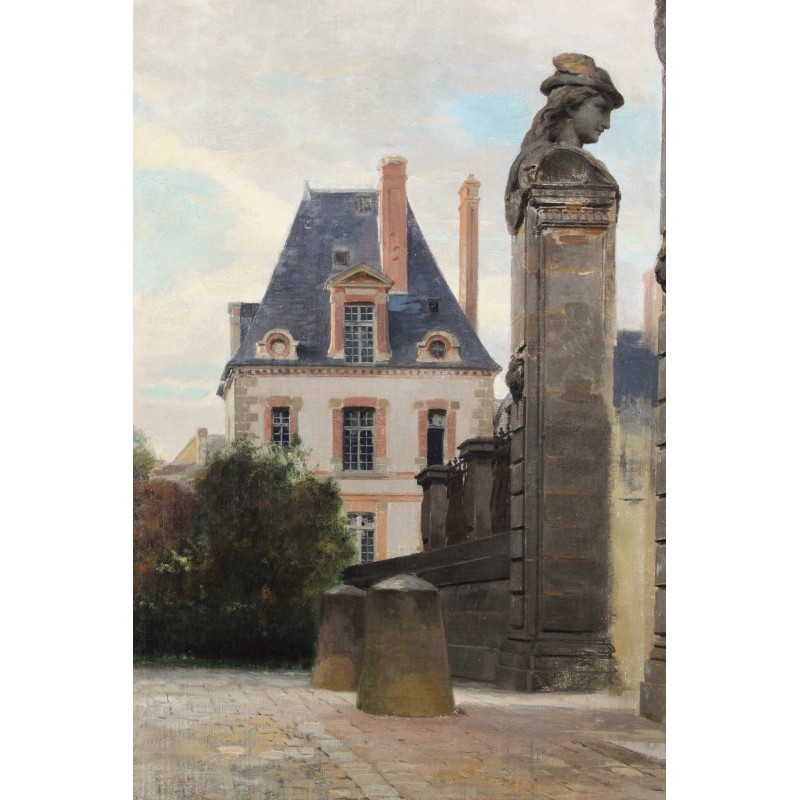
This elegant and free view of the Porte d'Hermès in Fontainebleau captivates with its originality and the quality of its execution. Although we have not been able to identify its author, it is clearly the work of a skilled hand that has rendered the scene faithfully, energetically, and with ease. The sky and cobblestones, executed quickly with impasto that reveals broad brushstrokes, contrast strikingly and happily with the meticulous detail of the architectural elements, thus emphasizing the importance of perspective.
Very fashionable in the second half of the 19th century, Fontainebleau was more popular for its forest than for its castle. The creation of a direct railway line from Paris to the estate made it more accessible to a large number of artists who were increasingly interested in depicting nature. The revolutionary invention of paint tubes made it possible to paint outdoors, on the spot, and to capture colors as they appeared. Our work seems to have been painted in this spirit.
The talent of our painter is remarkable in his choice of this surprising viewpoint and the intelligence of his composition. While the famous Porte Dauphine, the most majestic architectural feature of this part of the estate, depicted many times in art, is just a few meters away, our artist prefers to focus on the figures of Hermes with their backs to us. By choosing to represent this part of the estate without any animation, it is the atmosphere of the place that he seeks to immortalize. The painter draws our attention to what we do not see, restoring his perception and attempting to sublimate the mundane.
The unique dimension of this work is reinforced by its “non finito” areas, particularly between the two pillars of the Hermes statues, the precise point where the eye is naturally drawn. The artist left the crucial part of his composition blank, where a mysterious halo of light appears, where the gate should be.
Before him, in 1832, Thomas Shotter Boys (1803-1874) had produced a watercolor depicting the same view (Ill. 1). However, his perspective is different: the place is lively and slightly modified. In particular, he depicts the pavilion in the background with three windows of the same size on the first floor instead of one window larger than the other two in the center. The originality of the viewpoint remains remarkable, and one wonders whether our artist was aware of this watercolor.
Furthermore, the detail of the pine cone adorning the top of the vase above the first pillar in Shotter Boys' watercolor and in a photograph taken by Charles Marville around 1857 (ill. 2) is absent from our painting. We know that this pine cone disappeared a few years later, thanks to a photograph taken around 1861 by Baldus (ill. 3), which allows us to deduce that our painting is posterior to this date.
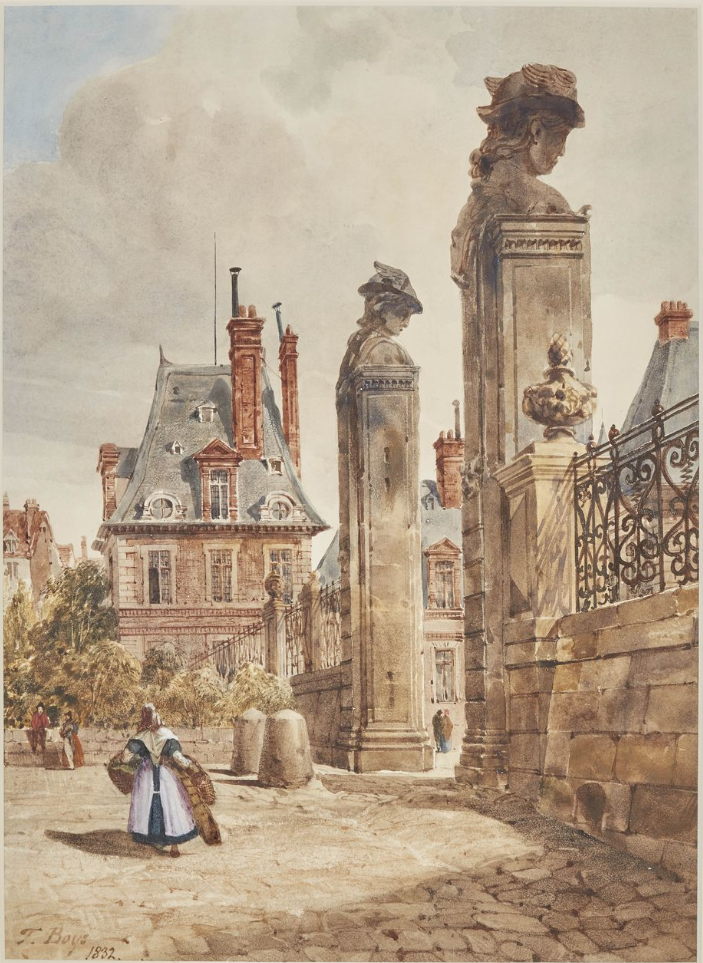
Ill. 1 / Thomas Shotter Boys (English, 1803-1874), Grille des Hermès, Porte Dauphine, Palais de Fontainebleau, watercolor with touches of gum arabic on white paper, 1832, 35 x 26 cm, signed and dated in ink, LL: T. Boys, 1832, Indianapolis Museum of Art at Newfields
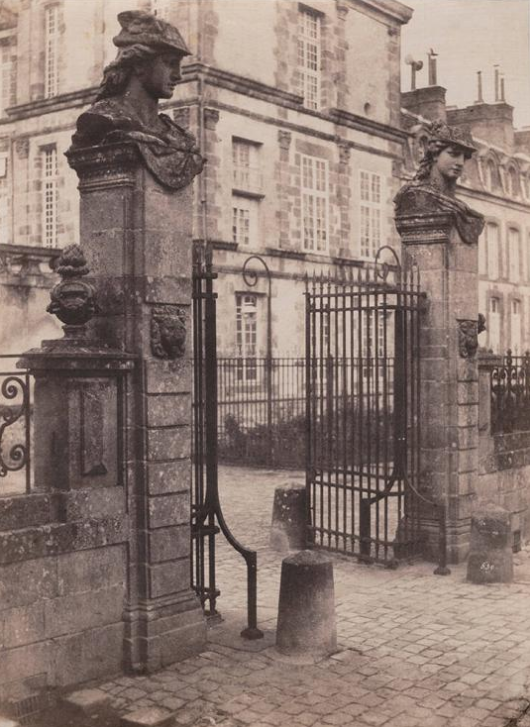
Ill. 2 / Charles-François BOSSU, known as Marville (1813-1879), Château de Fontainebleau, Cour Ovale vue depuis la cour des Offices, circa 1857, albumen print, 21.9 x 36.8 cm
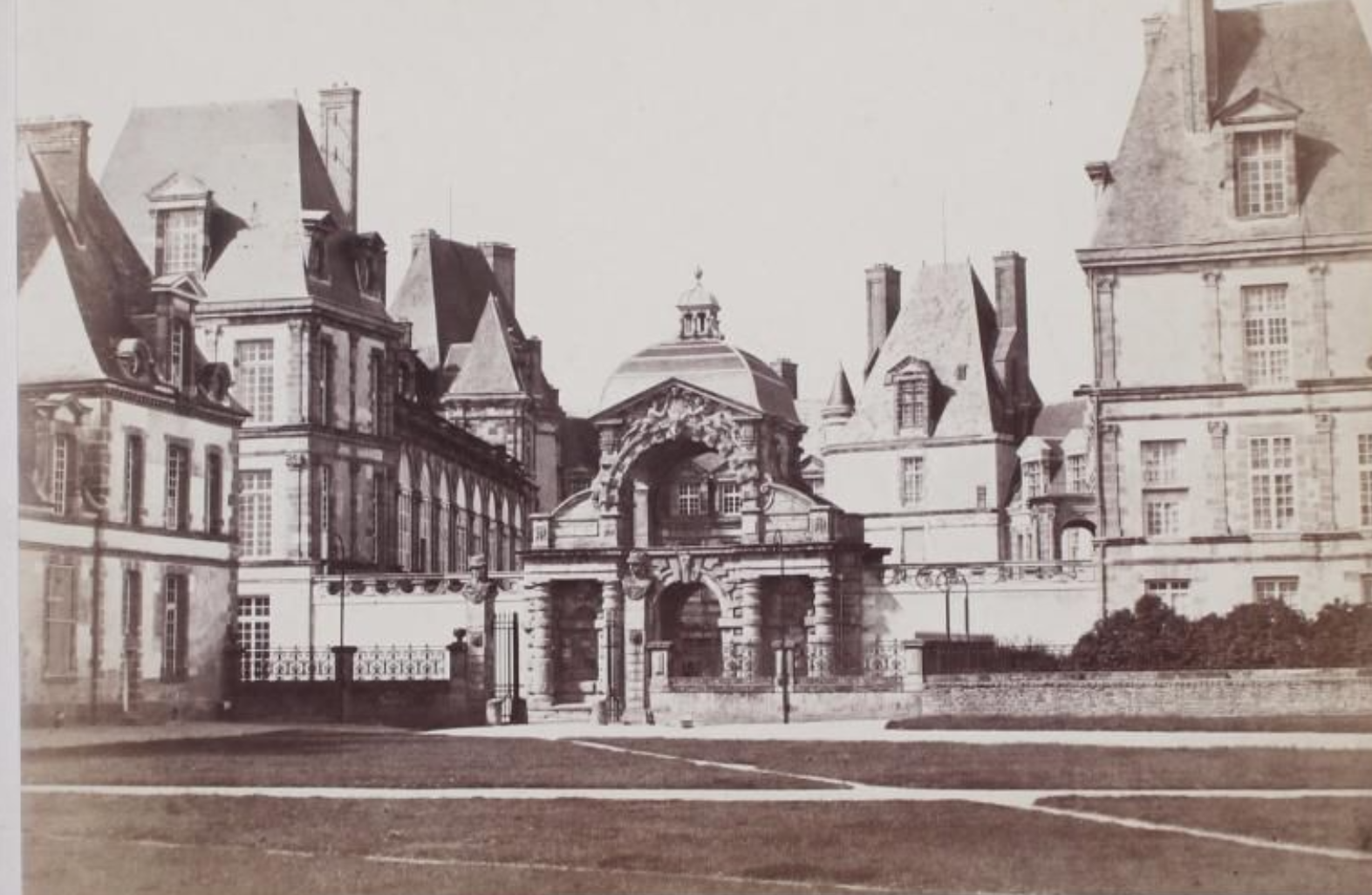
Ill. 3 / Édouard Baldus Fontainebleau (Seine-et-Marne) - Château, Porte Dauphine, 1861, photograph, H. 26.6; W. 35.3 cm
Avis
Aucun avis n'a été publié pour le moment.