
 View larger
More info
Despite the admission in 1783 of Adélaïde Labille-Guiard (1749-1803) and Élisabeth Vigée Le Brun (1755-1842) to the Royal Academy, the presence of women remained limited. The French Revolution and the abolition of the Academy in 1793 allowed women to exhibit more freely, and their numbers at the Salons multiplied in the years that followed. Traditionally, women painters were relatives of painters, trained in family workshops, but this model of family transmission was gradually replaced by private workshops. From the 1770s, Jean-Baptiste Greuze (1725-1805) welcomed women among his pupils, as did Jean-Baptiste Regnault (1754-1829) and Joseph-Benoît Suvée (1743-1807), to name but a few of these major figures. Jacques-Louis David (1748-1825) even opened a studio for young girls. These studios became crucial for the professional ambitions of women. They benefited from the reputation of the master and his network, which facilitated their access to the Salon, the building of a clientele and the recognition of the status of artist. Some women artists, such as Adélaïde Labille-Guiard, Pauline Auzou (1775-1835), Hortense Haudebourt-Lescot (1784-1845) and Louise Hersent (1784-1852) set up their own studios.
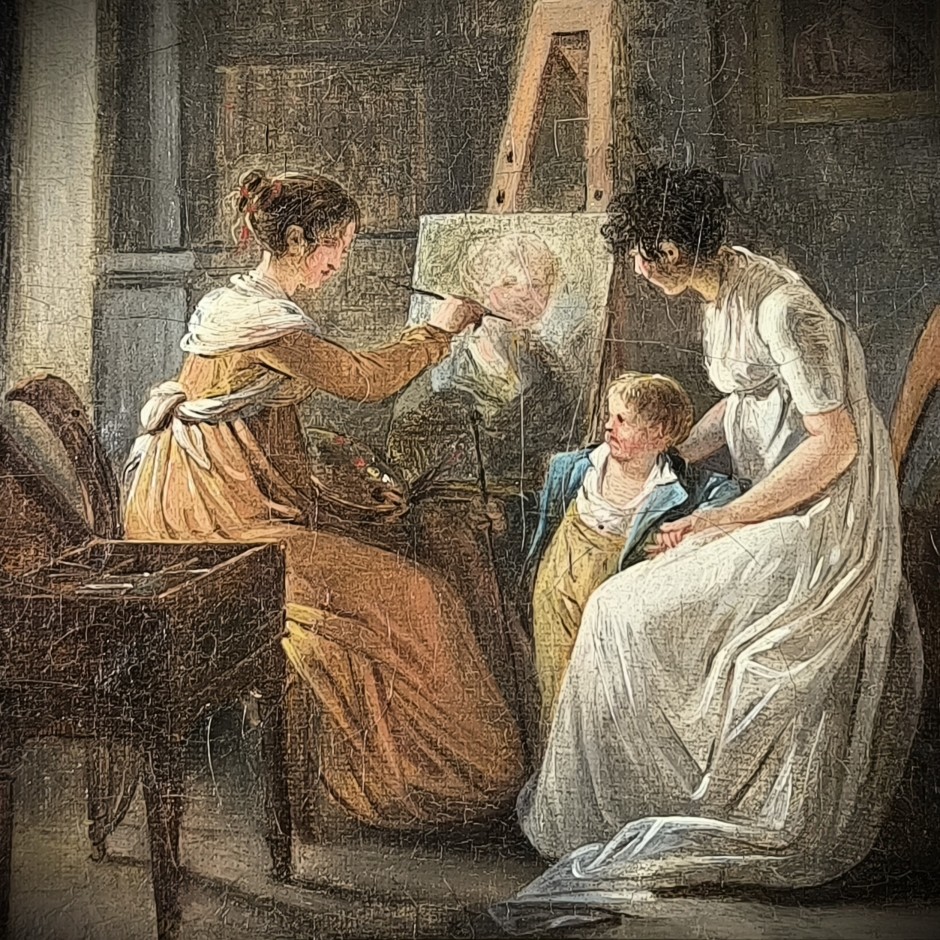
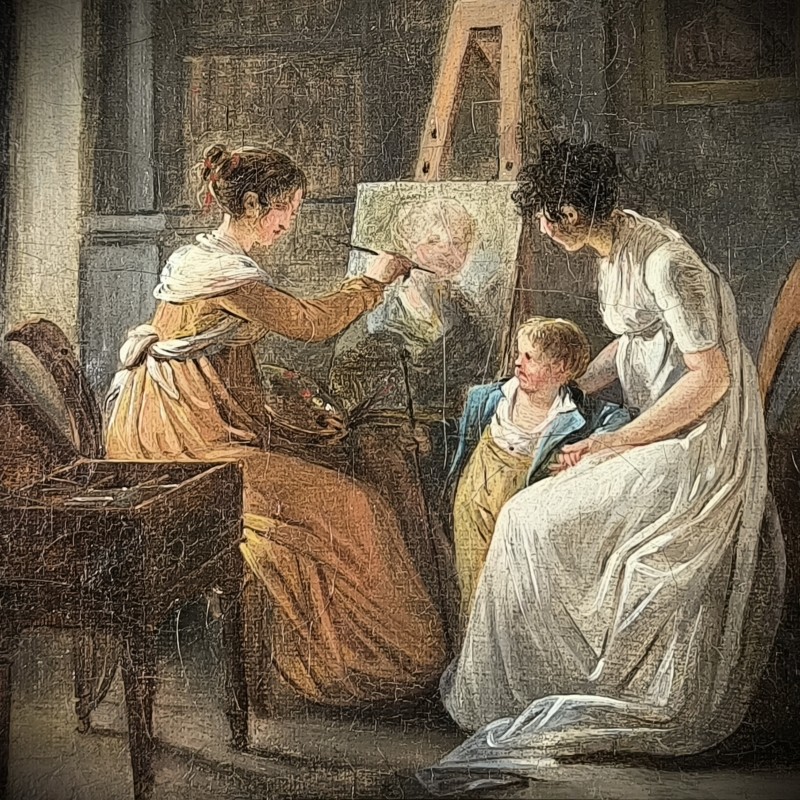
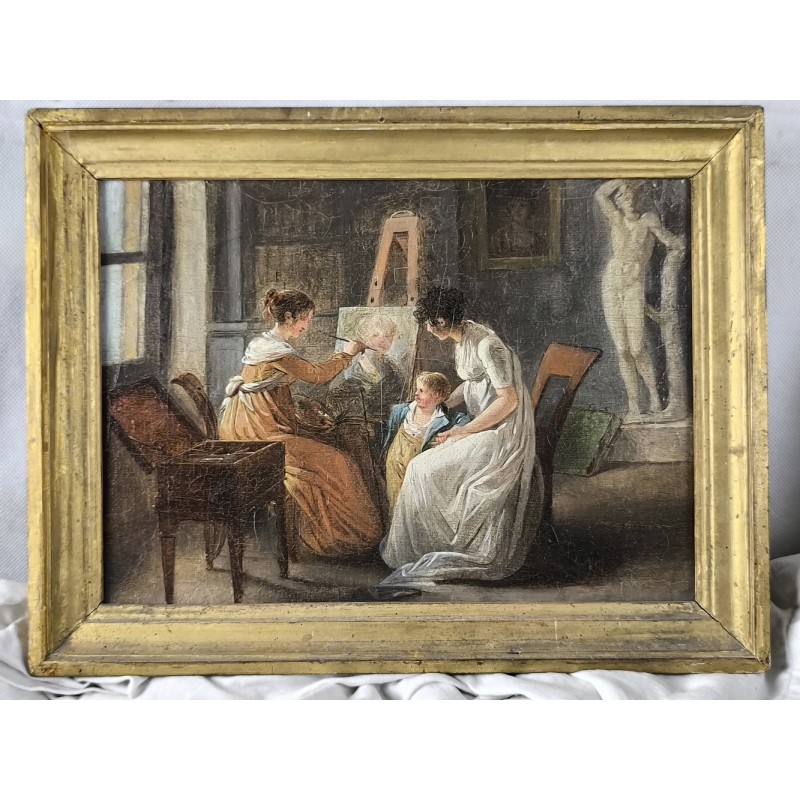
This painting bears witness to these private workshops that enabled women to pursue a professional career in a world still largely dominated by men. In addition to the tools essential to the practice of painting and drawing described, the drawing board, the easel, the palette, the artist's cabinet, we notice a plaster cast of the Lycian Apollo from the Louvre after Praxiteles (inv. MR 79). This representation of a male nude was necessary for the study of the nude for a woman artist. An essential prerequisite for the great genre, they would be deprived of this education until the end of the 19th century.
Our painting, like Boilly's painting of the same subject in the Staatliches Museum Schwerin in Germany (inv. G240), is an attractive representation of the intimacy of these private workshops.
Avis
Aucun avis n'a été publié pour le moment.