
 View larger
Joseph DUCREUX (1735 -1802)
Demande d'informations
| Black chalk and white highlights on paper |
| 63,6 x 49,3 cm |
| Collection parisienne |
More info
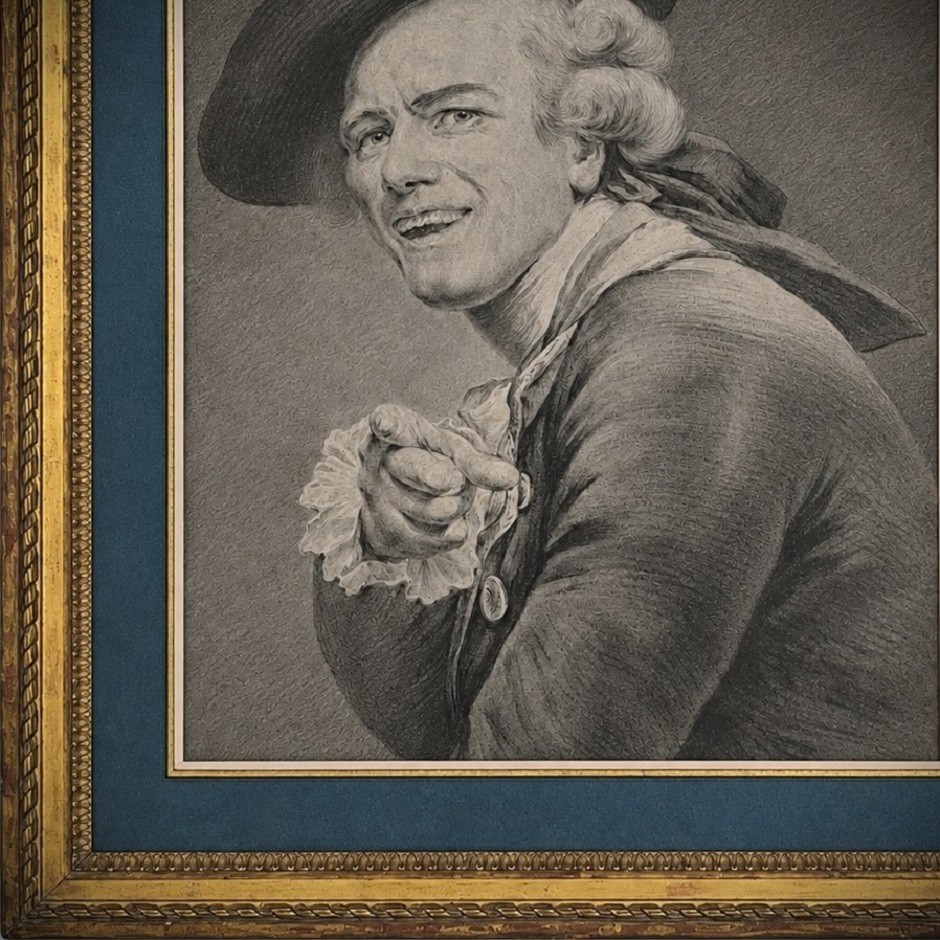
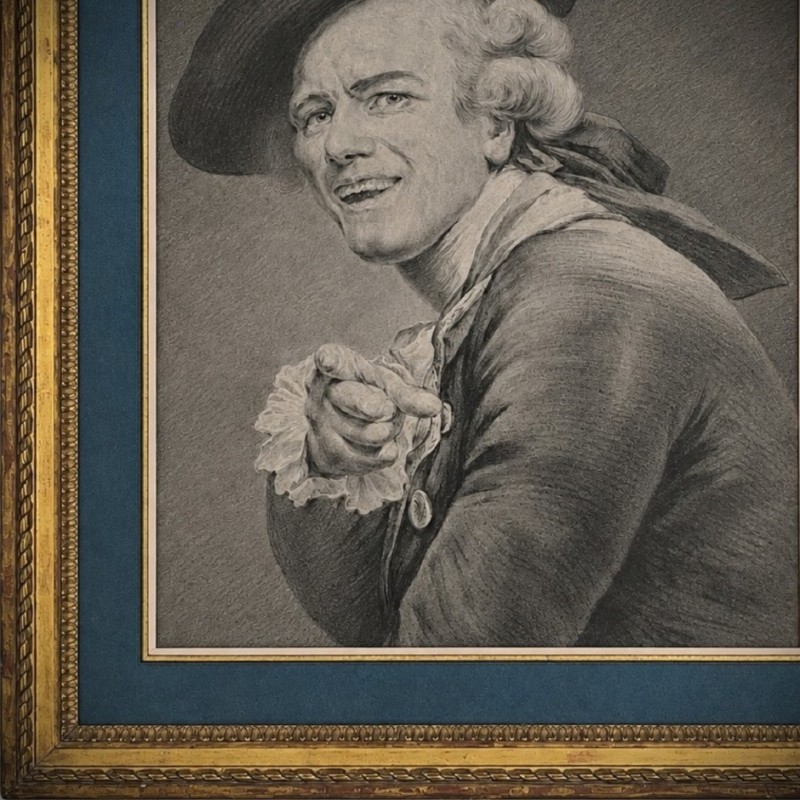
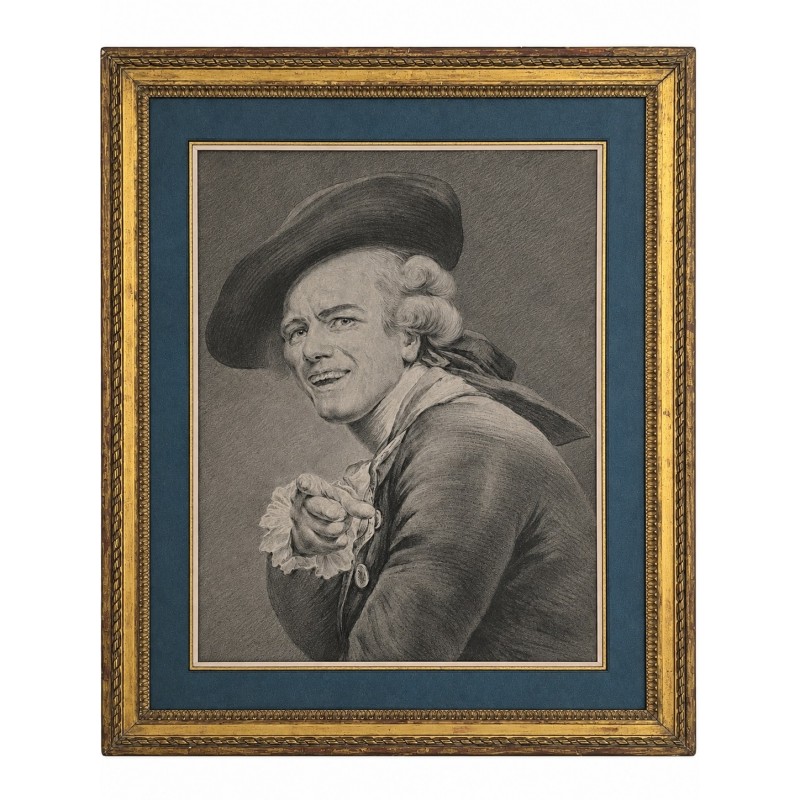
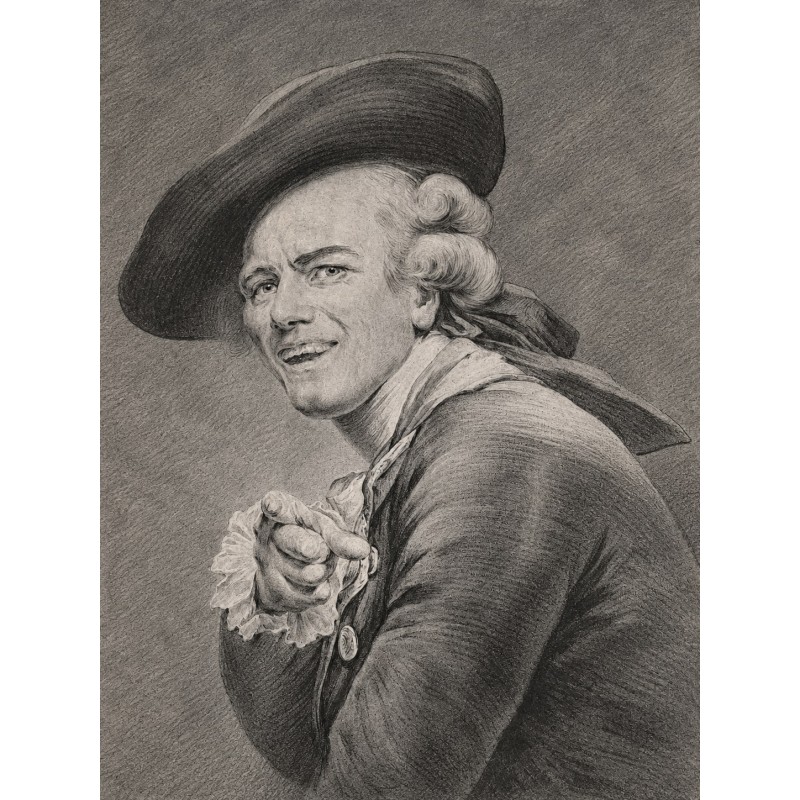
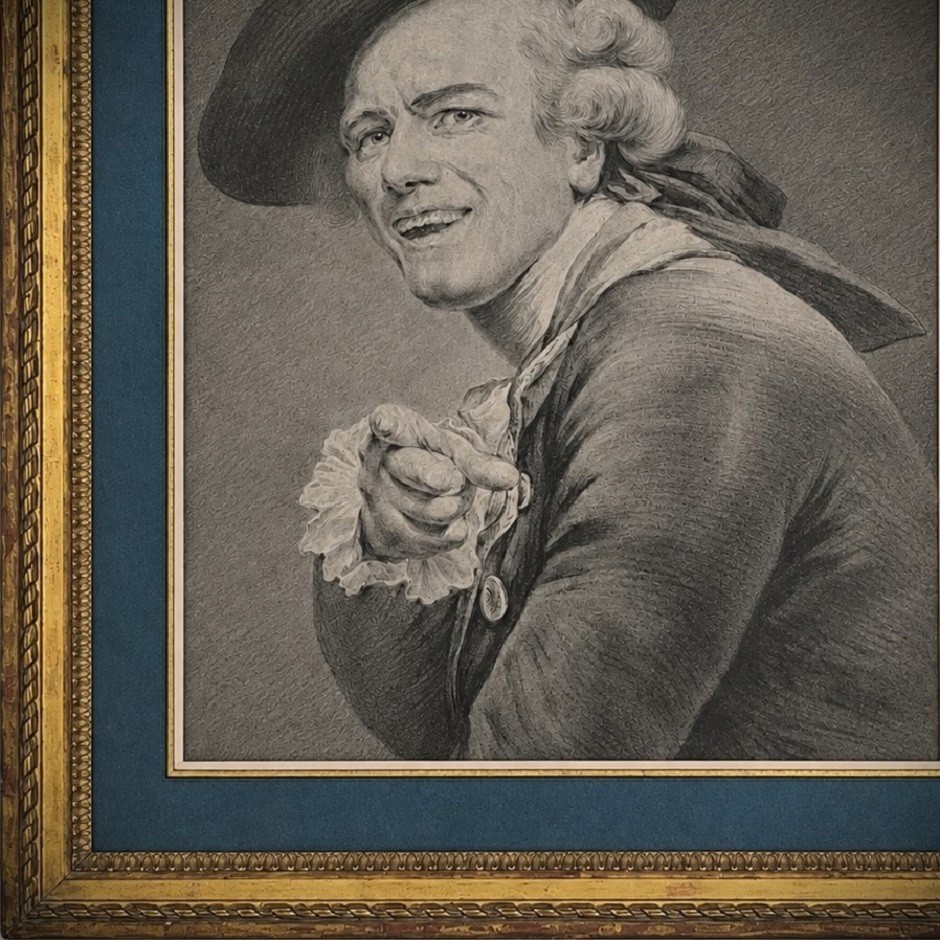
With his face turned toward the viewer and a broad, sketched-out smile, Ducreux adopts
a deliberately theatrical and provocative pose here, accentuated by the gesture of his hand, which seems to point directly at the viewer.
Born in Nancy in 1735, Joseph Ducreux likely trained under his father, himself a painter, before moving to Paris in 1760, where he is said to have worked with Maurice Quentin de La Tour. A specialist in portraiture, he quickly made a name for himself through his mastery of pastel and, later, oil painting. His career took a decisive turn in 1769, when Louis XV sent him to Vienna to paint portraits of the imperial family, notably that of the future Marie-Antoinette. Admitted as a member of the Imperial and Royal Academy of Vienna in 1770, he subsequently became the Emperor’s painter and was appointed chief painter by Marie-Antoinette.
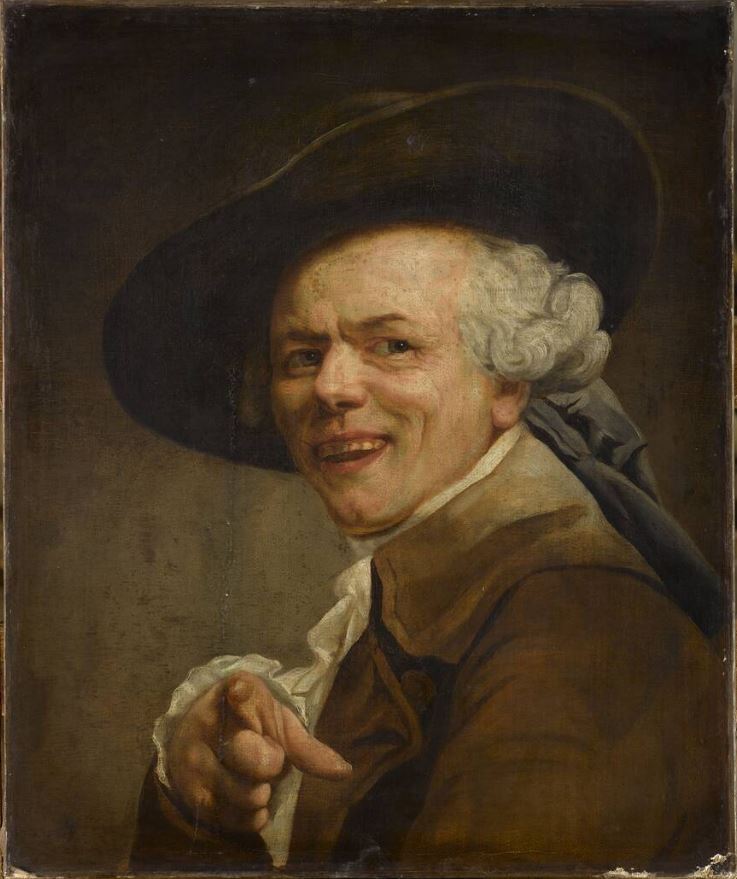
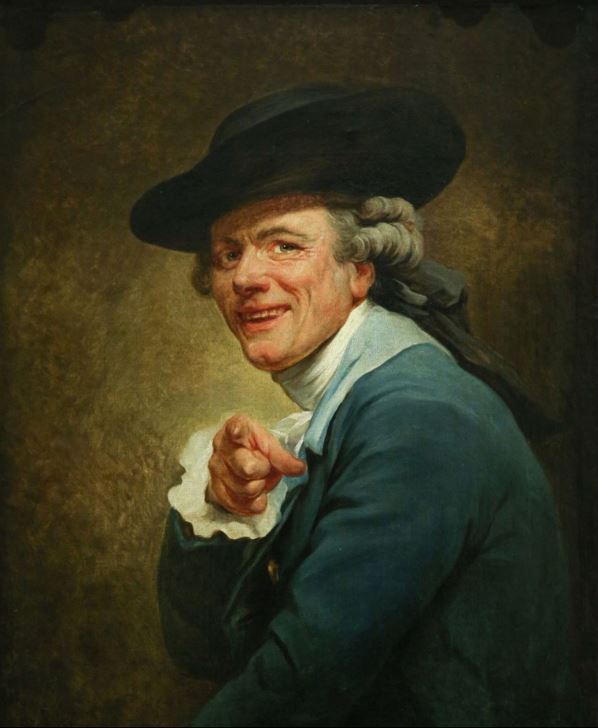
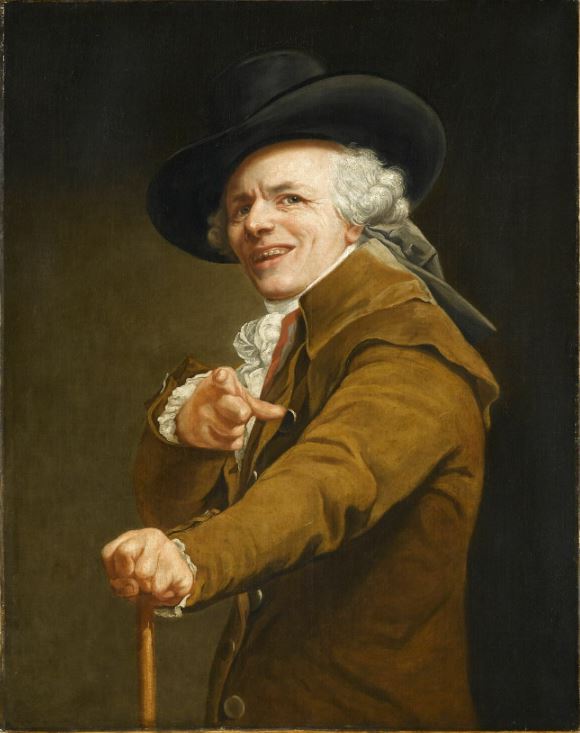
This beautiful drawing, executed in black chalk, joins the three painted versions of the artist “as a mocker” held by the Louvre. Painted around 1783, one is currently on loan to Versailles (ill. 1) (RF 1727), another is on loan to the Museum of Art and History in Cholet (ill. 2) (RF 1985 4), and the last, the best known, is on view at the Louvre-Lens (ill. 3) (RF 2261).
Ill. 1
Ill. 2
Ill.3
This work, however, stands out for its execution in black chalk, a technique particularly well-suited to this exploration of facial features and expression. A comparison with the painted versions reveals several compositional variations, notably in the angle of the hat and the clothing, which demonstrate a genuine freedom in the reinterpretation of the motif. These differences allow us to view the sheet as an independent interpretation—or even as a preparatory or parallel study—rather than as a simple copy of a painted composition.
Thanks to its generous format for this medium—which allowed Ducreux to depict himself life-size with even greater expressiveness—and the variations it presents compared to the known painted versions, this previously unpublished work enriches the particularly fascinating record of Ducreux’s experimental approach, whose expressive self-portraits occupy a truly unique place in 18th-century portraiture.
We thank Neil Jeffares, a specialist in 18th-century pastel portraits, for confirming the work’s authenticity, although he is not an expert in drawing. The authenticity of this work has been confirmed by Emilie-Juliette Gauby, author of a research thesis on the artist (Émilie-Juliette Gauby, Joseph Ducreux 1735–1802: Portrait Painter, thesis, Blaise Pascal University of Clermont II, 2004).
Avis
Aucun avis n'a été publié pour le moment.