
 View larger
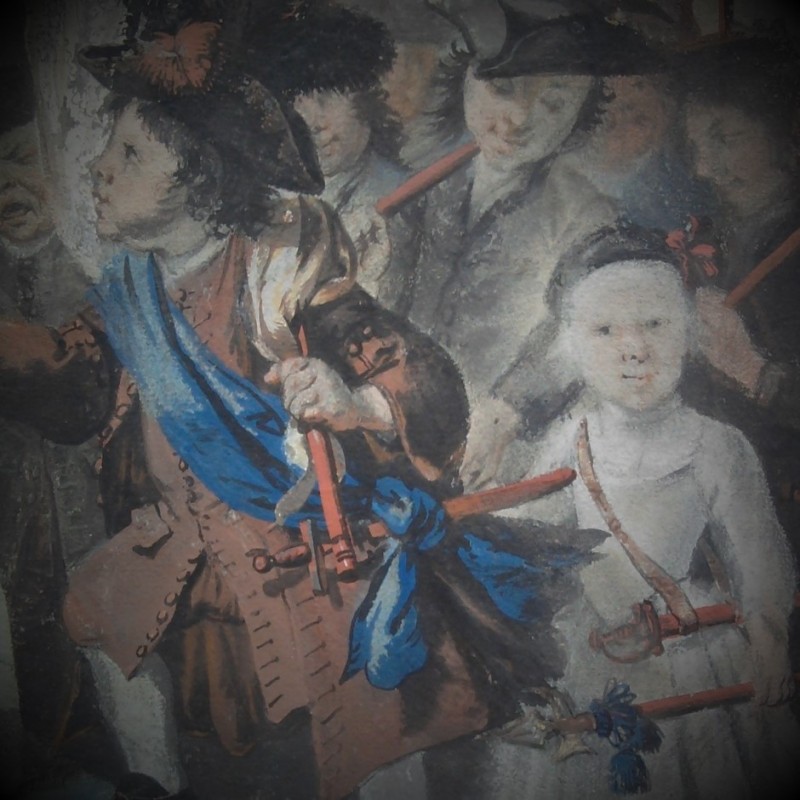
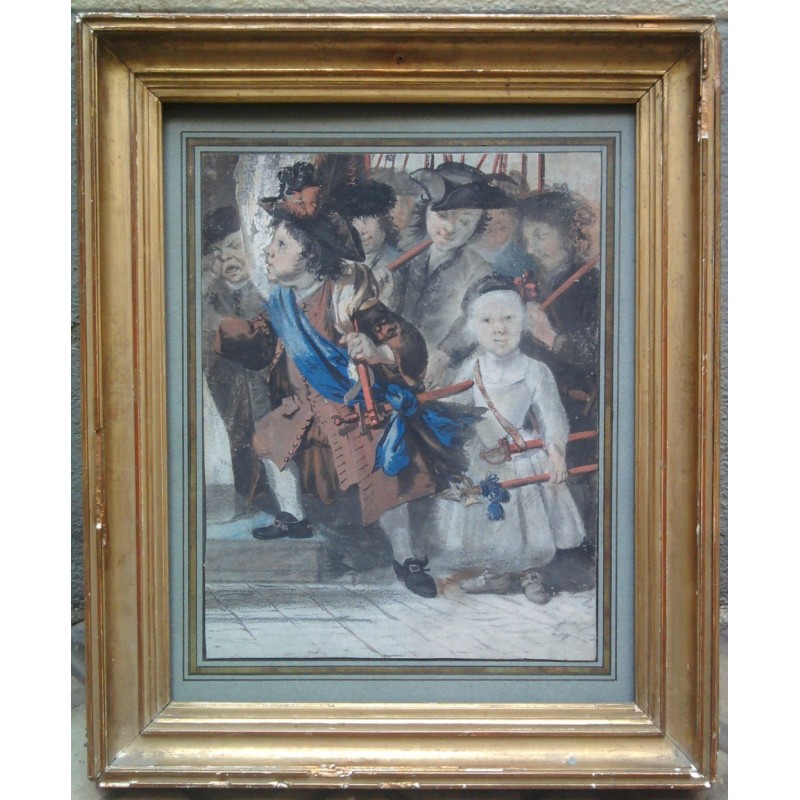
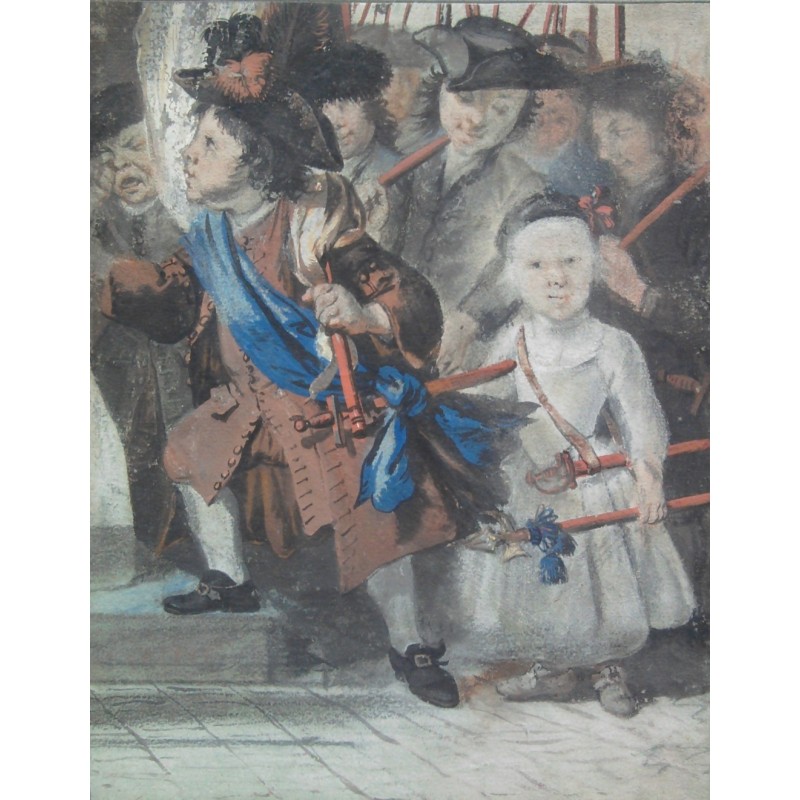
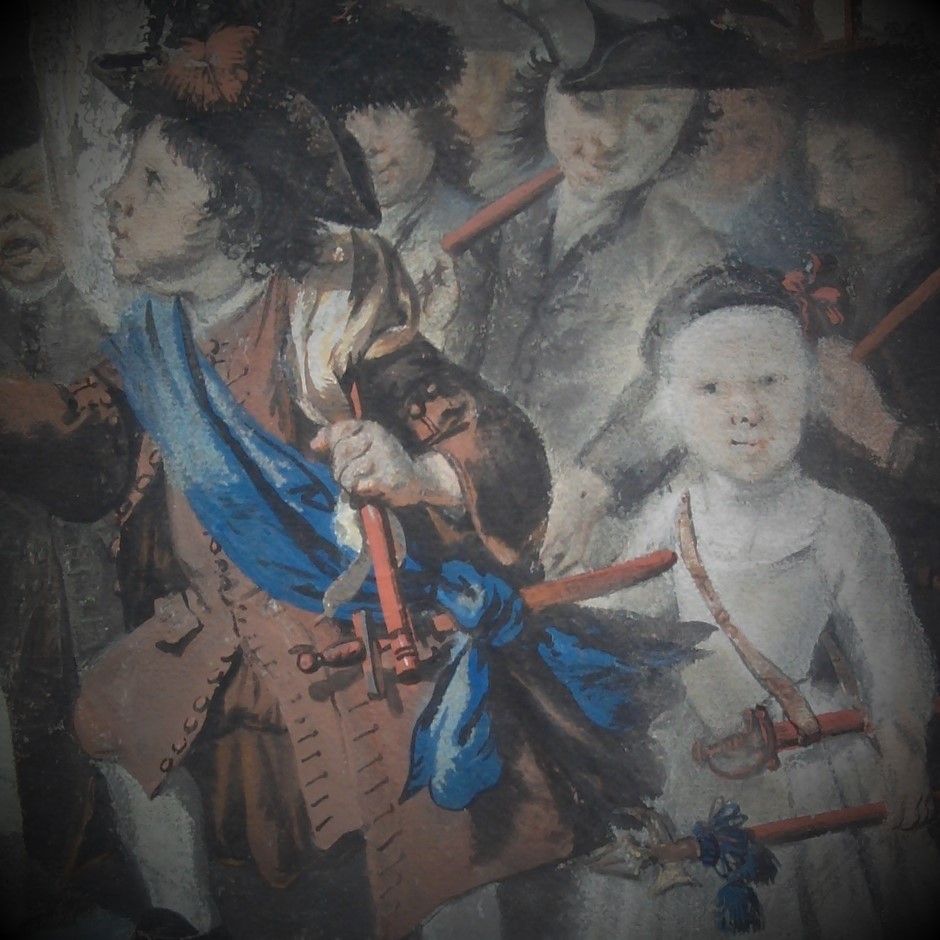
Cornelis TROOST (1696 - 1750)
Demande d'informations
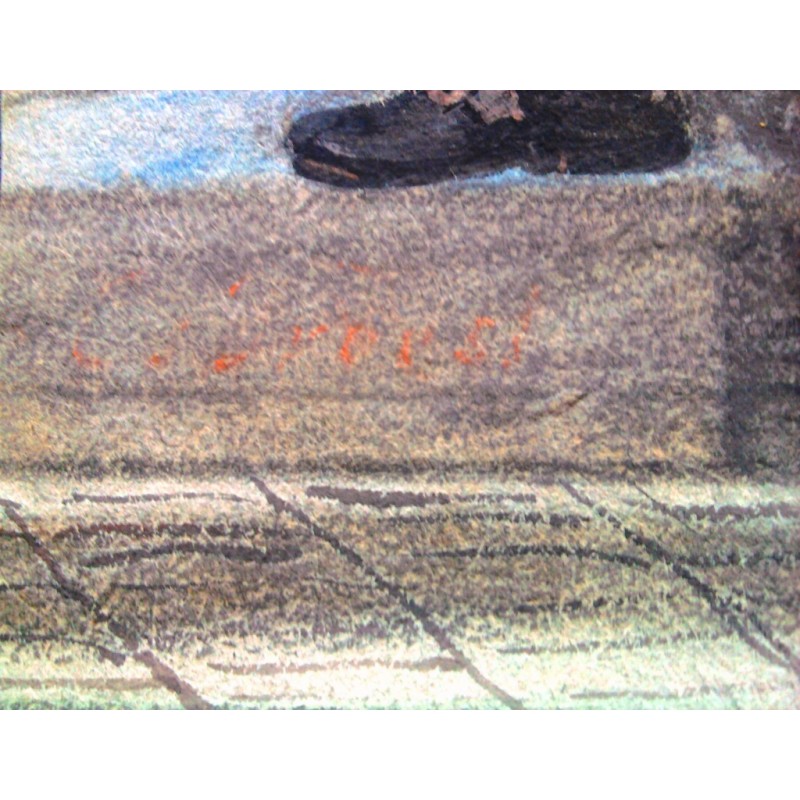
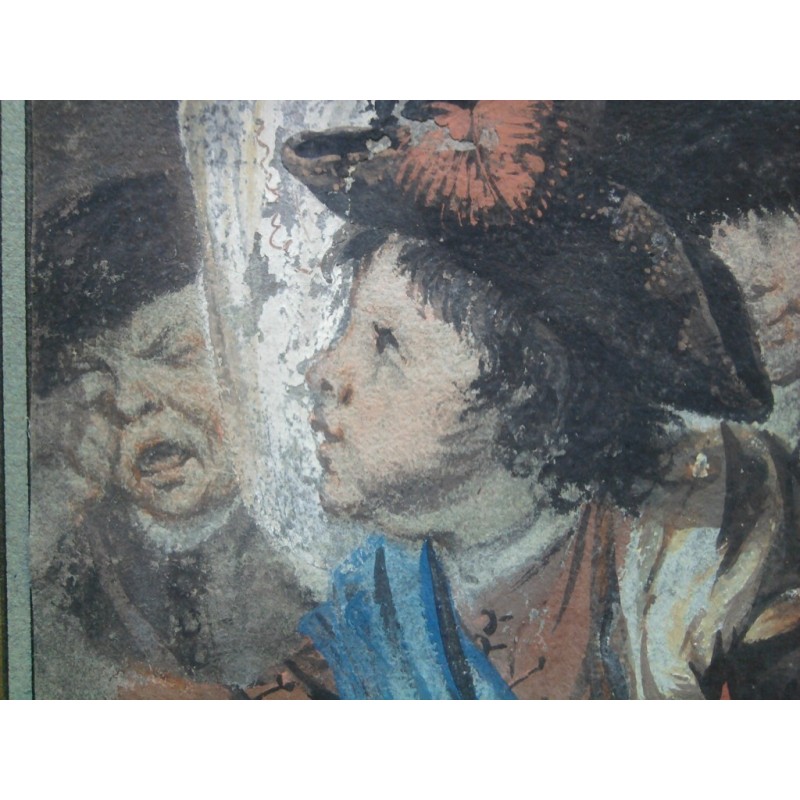
| Signed at the bottom left " C.TROOST" |
| Brush and grey wash, gouache and pastel on paper mounted on canvas |
| 25 x 19,2 cm |
| Circa 1738 |
More info
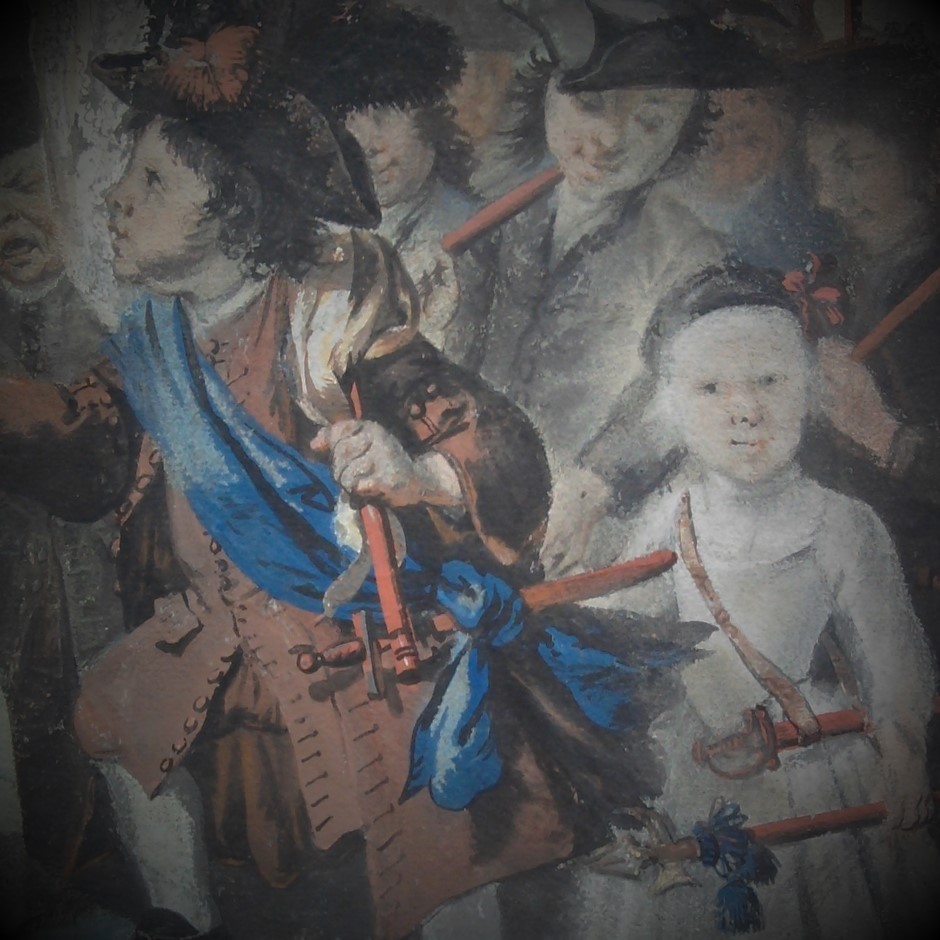
Cornelis Troost often created relatively large works and then used details from them to make smaller pieces, often in gouache.
This is the case with our drawing. It is a detail from a work created in 1738, which has since disappeared. We know of a copy made by his daughter Sara Troost in 1786, entitled ‘Kermisvreugd der Kinderen’.

Kermisvreugd des Kinderen, Sara Troost
‘Kermisvreugd der Kinderen’ Oil on canvas by Sara Troost, 1786, based on a work by Cornelis Troost, now lost
There is another detail, in gouache: ‘Trommelende jongen’. This work is one of Cornelis Troost's most famous. It is kept at the Rijksmuseum in Amsterdam and was used to illustrate the poster for an exhibition dedicated to this artist in 2008. Both are on blue paper of the same height.

‘Trommelende jongen’, Cornelis Troost, Rijksmuseum, Amsterdam

The two drawings side by side
Contrary to what we can read in the Rijksmuseum's notes, ‘Trommelende jongen’ is not a preparatory study for the pastel entitled ‘Het Amsterdamse Kermisfeest’ executed in 1738, an engraving of which by Jacobus Houbraken (1698-1780) is kept in the same place.

‘Het Amsterdamse Kermisfees’, engraving by Jacobus Houbraken (1698–1780) based on a pastel by Cornelis Troost
In fact, there are two errors to note. Not only is this gouache not a study but a finished work typical of our artist's work, but it also does not refer to the work indicated but to the lost work copied by Sara Troost.
The absence of a feather on the hat in ‘Trommelende jongen’ and the presence of the march in the background support this theory. Our work, which fits perfectly like a piece of a puzzle, confirms this.
Biography of Cornelis TROOST:
Cornelis Troost, known as the Dutch Hogarth, sometimes even the Dutch Watteau, was a portrait, genre and history painter and engraver.
He was born in Amsterdam on 8 October 1697 and died in the same city on 7 March 1750.
A pupil of Arnold van Boonen, he married Maria van der Duyn in Zwoll in 1720, settled in Amsterdam, and was granted citizenship in 1726.
Cornelis Troost belonged to the period of decline of the Dutch School; nevertheless, he was a painter full of spirit who effectively captured the customs of his time. He had a very special technique, half pastel, half watercolour.
He also painted in oils and created theatre sets and interior decorations.
Notre artiste se rattache nettement à ses devanciers du XVIIème, c'est à dire toujours très près d'une traduction littérale du réel. Mais à son époque, au XVIIIème siècle, les grands maîtres étaient tous disparus et seule la minutie des détails tenait lieu de génie. Troost n'a pas échappé à la mode de son temps, il en est même un parfait représentant.
Selon Fuchs, son biographe, il était l'artiste le plus doué et le plus varié de sa génération, celle qui succède à l'âge d'or de la peinture néerlandaise du siècle précédant.
Source : E. BENEZIT, Dictionnaire des peintres, sculpteurs, dessinateurs et graveurs, T. 10, Gründ.
Avis
Aucun avis n'a été publié pour le moment.