
 View larger
Nicolas-Bernard Lépicié (Paris, 1735 - 1784)
Demande d'informations
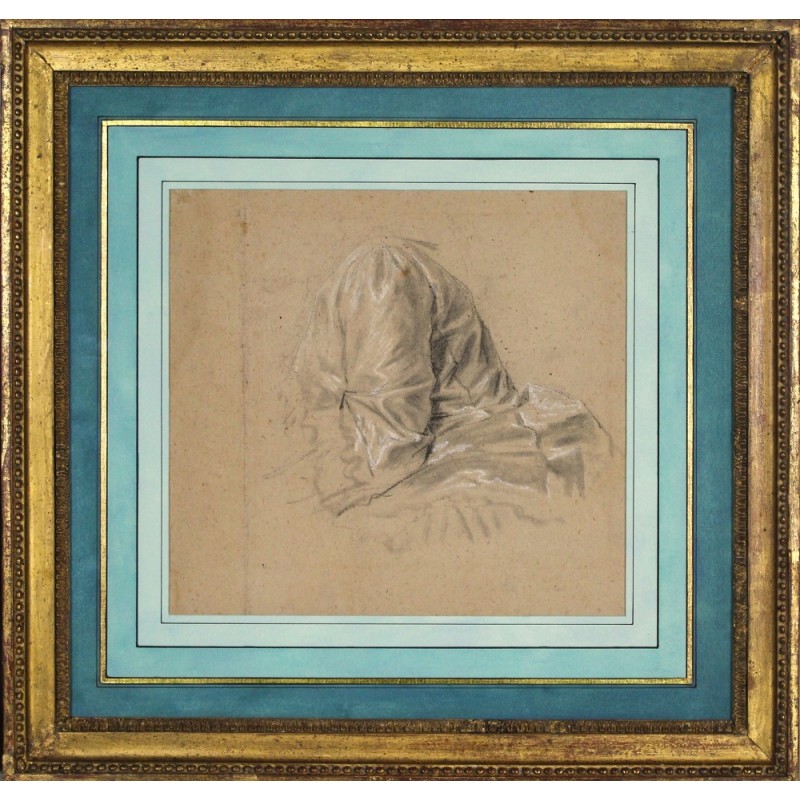
| Verso: study of drapery |
| Black chalk and white chalk highlights on paper |
| Annotated “Van Loo” lower right |
| 29 x 30,5 cm |
More info
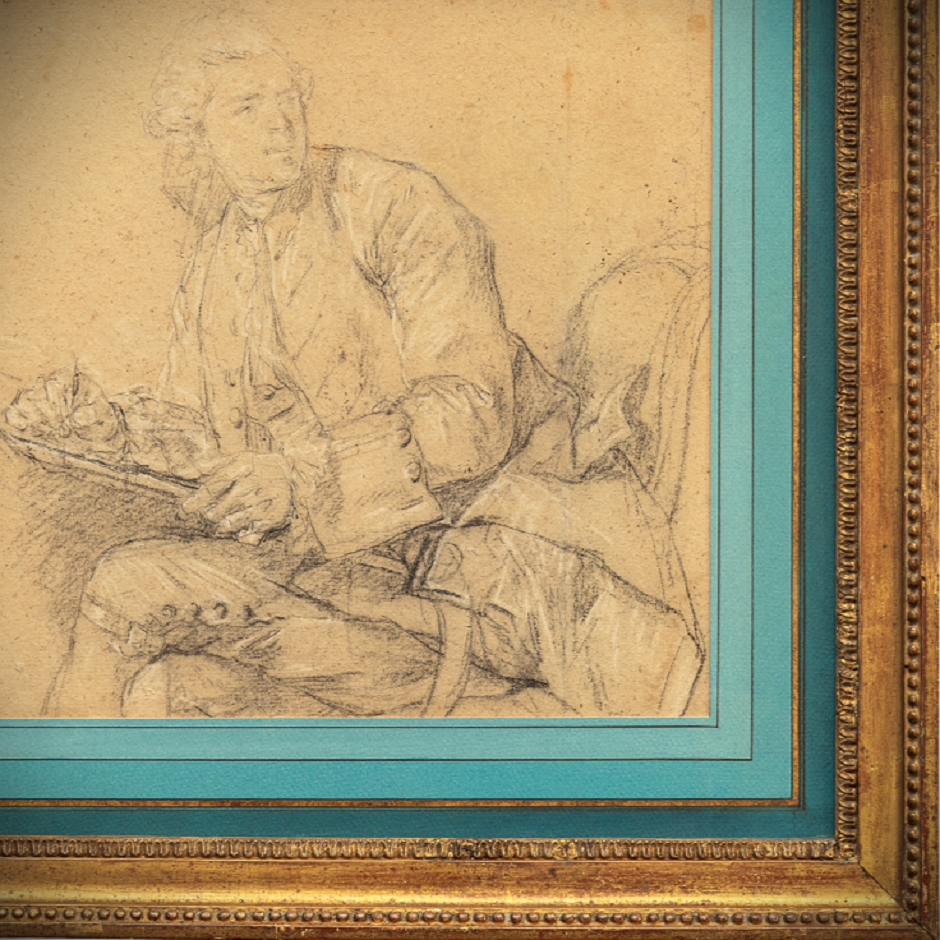
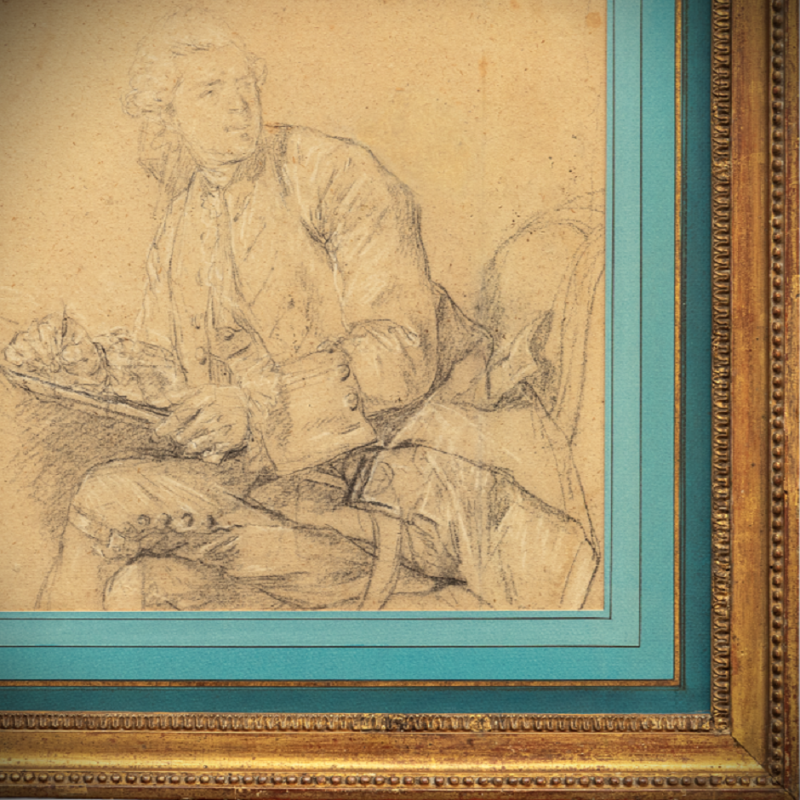
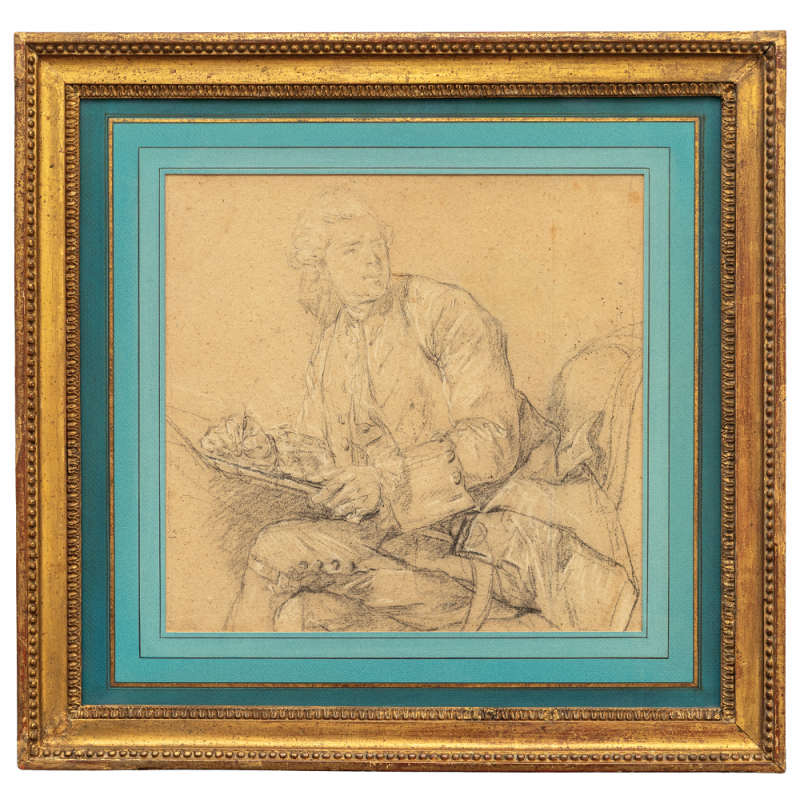
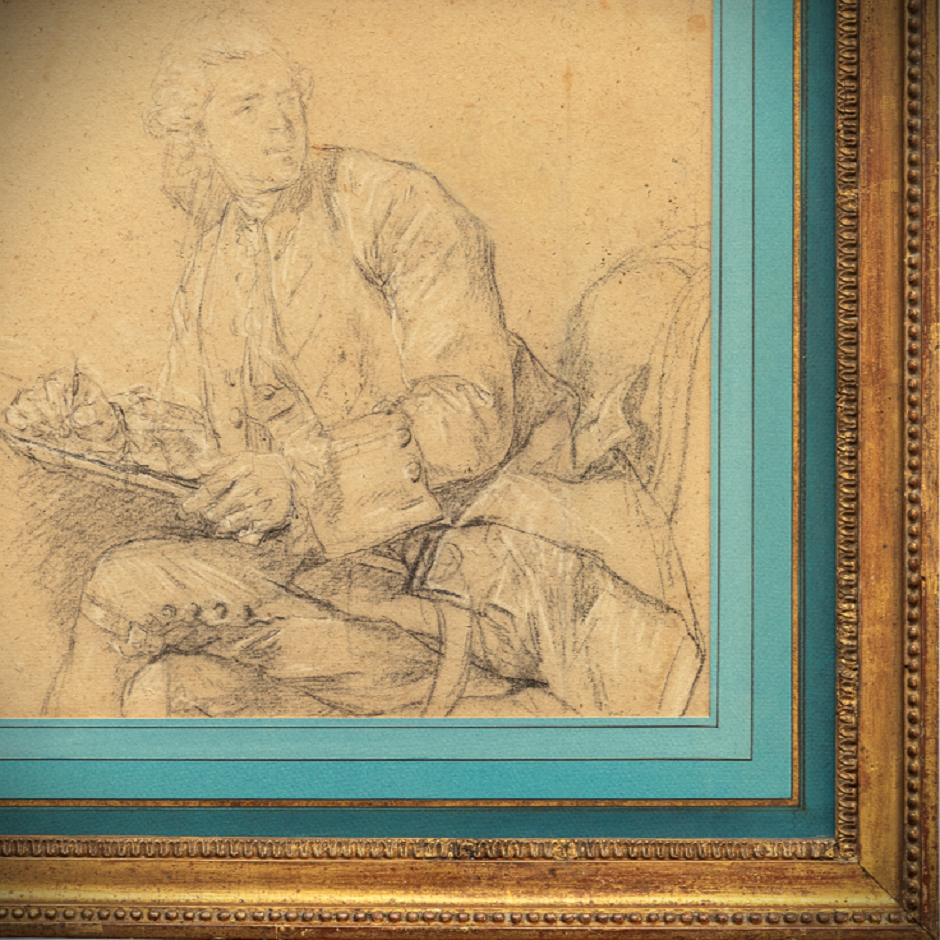
The quality of this beautiful portrait seems to have intrigued many collectors and art lovers since the 18th century. It has been attributed successively to Carle van Loo, Charles Parrocel, and Jean-Marc Nattier. It is in fact a preparatory drawing for l'Autoportrait that Nicolas-Bernard Lépicié exhibited at the 1777 Salon, now kept at the Calouste Gulbenkian Museum in Lisbon1 (Ill.1). We can also see the stylistic similarities with other works by the artist, such as the treatment of the hands, which is identical to that in the study for the husband in the painting L'Union paisible (Peaceful Union) presented at the 1777 Salon (Ill.2) or in l' Académie d'homme nu, les bras attachés par des cordes (Academy of a Nude Man with Arms Tied with Ropes) sold in 2019 (Ill.3).
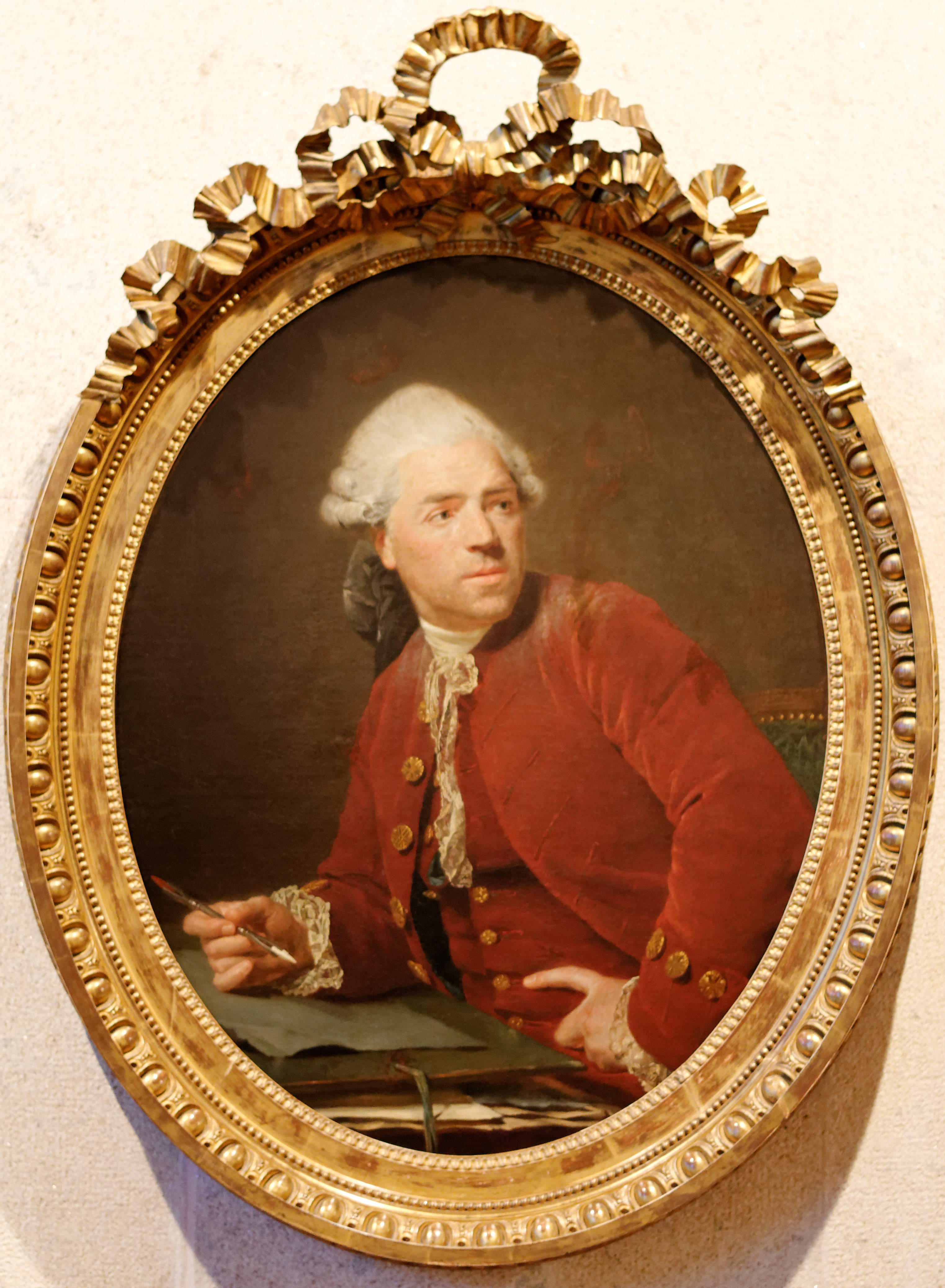
Ill 1. Nicolas-Bernard Lépicié, l'Autoportrait, 1777, Oil on canvas, 91x71.5 cm, Lisbon, Gulbenkian Museum, 2386
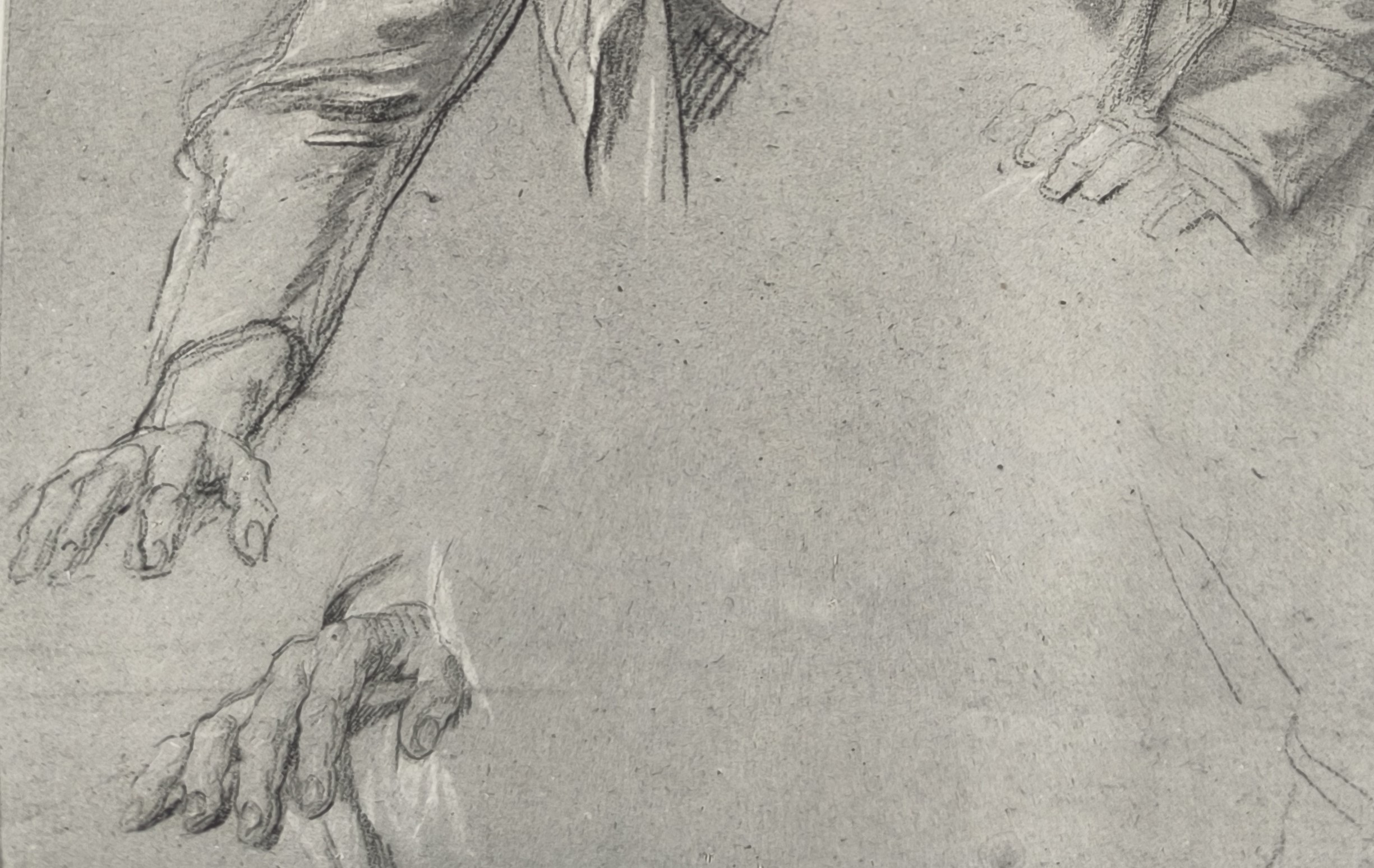
Ill. 2 Study for the husband in Nicolas-Bernard Lépicié's painting L'Union paisible. Black chalk, white highlights, and red chalk on beige paper, 241 x 226mm, Department of Graphic Arts, Louvre Museum.
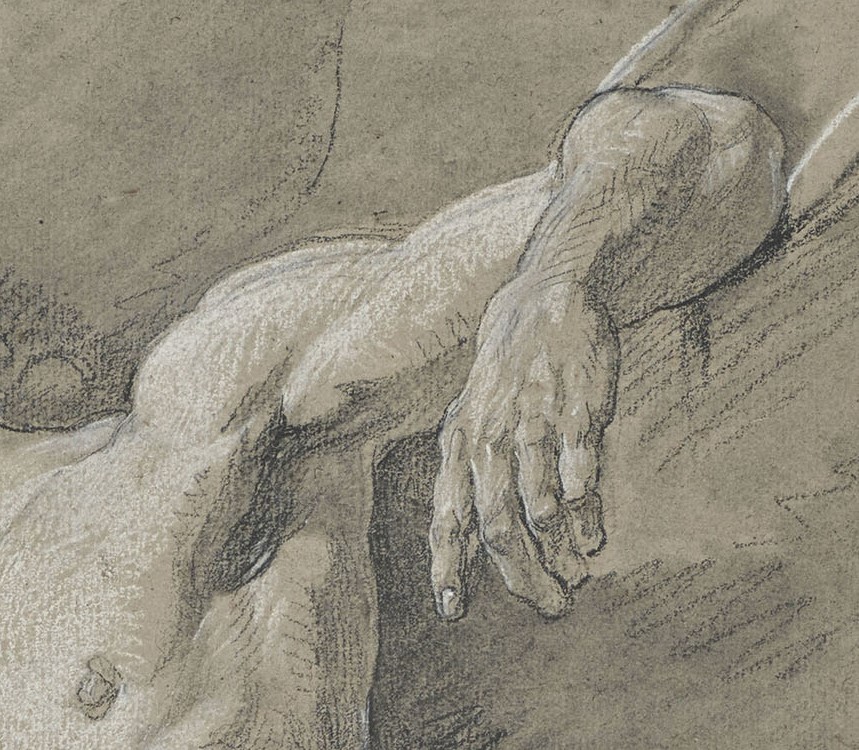
Ill.3 Académie d'homme nu, les bras attachés par des cordes (Academy of a nude man, arms tied with ropes) by Nicolas-Bernard Lépicié. Black chalk, white chalk, stump, on gray paper, 544 x 373 mm; Christie’s, Paris, auction of March 27, 2019, lot 92.
We know about Lépicié's life and career thanks to the monograph written about him by Philipe Gaston-Dreyfus in 19232. The artist is depicted here at around 40 years of age, when he was a famous and respected painter to the king. He had been approved by the Royal Academy of Painting and Sculpture since 1764 and was accepted as a member in 1769 with his painting Achilles et le Centaure3 (Achilles and the Centaur). He was appointed assistant professor in the early 1770s and became a full professor in 1777. He lived and worked in the galleries of the Louvre, where he ran a studio. His many students included Carle Vernet, Jean-Baptiste Regnault, Henri-Pierre Danloux, and Jean-Joseph Taillasson. It was around this time that, inspired by Chardin, Greuze, and Flemish masters such as Teniers, he turned to depicting scenes from everyday life. This new direction made him one of the most popular painters of his time. For example, he presented one of his masterpieces at the 1775 Salon, L'Intérieur d'une douane (Inside a Customs House), now in the Thyssen-Bornemisza National Museum in Madrid4. Suffering from a chest ailment, he was unfortunately in poor health and died prematurely before the age of fifty. Our drawing, with its wider frame than the Lisbon painting, allows Lépicié to depict himself in action, a cardboard box on his knees, drawing while looking at his model, in the dynamic attitude of the creative act. It is particularly moving to think that this man, described as gentle, modest, and loved by his friends, may have chosen to depict himself with such vigor to mask his fragile constitution.
This drawing was discovered by Jacques Petithory, the generous donor to the Bonnat Helleu Museum in Bayonne, who, as an excellent art dealer with a renowned eye and knowledge, attributed it to Charles Parrocel. A key figure in the art market in Paris, London, and New York, Petithory had a reputation as a “genius bargain hunter5”. He was above all a collector; he loved his works and practiced the profession of antique dealer “reluctantly,” selling out of necessity, because “in order to buy, one had to sell6”. To discourage customers from acquiring the works he cherished most, he did not hesitate to ask exorbitant prices7. Yet his stall at the Biron market in the Saint-Ouen flea market was very popular, attracting famous fashion designers, writers, illustrious collectors, and museum curators. He also sold to many institutions such as the Metropolitan Museum of Art and the Getty. No doubt he found it difficult to part with this beautiful drawing, which he published on the cover of one of his catalogs. He surely cursed the buyer, as he often did, because he believed that the buyer would never cherish the work as much as he did8.
We would like to thank Patrick Michel for confirming the attribution of this drawing to Lépicié.
1. Inv. 2386.
2. P. Gaston Dreyfus, Nicolas Bernard Lépicié (1735 – 1784), Paris, 1923
3. Oil on canvas, 142 x 195 cm, Musée des Beaux-Arts de Troyes, inv. D.896.1
4. Oil on canvas, 98 x 164 cm, inv. 219
5. Vincent Ducourau, « Introduction » dans La donation Jacques Petithory au musée Bonnat, Bayonne, cat. exp. Paris, Musée du Luxembourg, 1997-1998, p. 26.
6. Pierre Rosenberg, « Jacques Petithory « brocanteur » » dans La donation Jacques Petithory au musée Bonnat, Bayonne, cat. exp. Paris, Musée du Luxembourg, 1997-1998, p. 14.
7. Pierre Rosenberg, « Jacques Petithory « brocanteur » » dans La donation Jacques Petithory au musée Bonnat, Bayonne, cat. exp. Paris, Musée du Luxembourg, 1997-1998, p. 17
8. Alvar González-Palacios, « L'écorché vif » dans La donation Jacques Petithory au musée Bonnat, Bayonne, cat. exp. Paris, Musée du Luxembourg, 1997-1998, p. 23
Avis
Aucun avis n'a été publié pour le moment.