
 View larger
Portrait or self-portrait of a woman artist
Demande d'informations
| Pastel on vellum |
| 54 x 44,5 cm |
| Circa 1780 |
More info
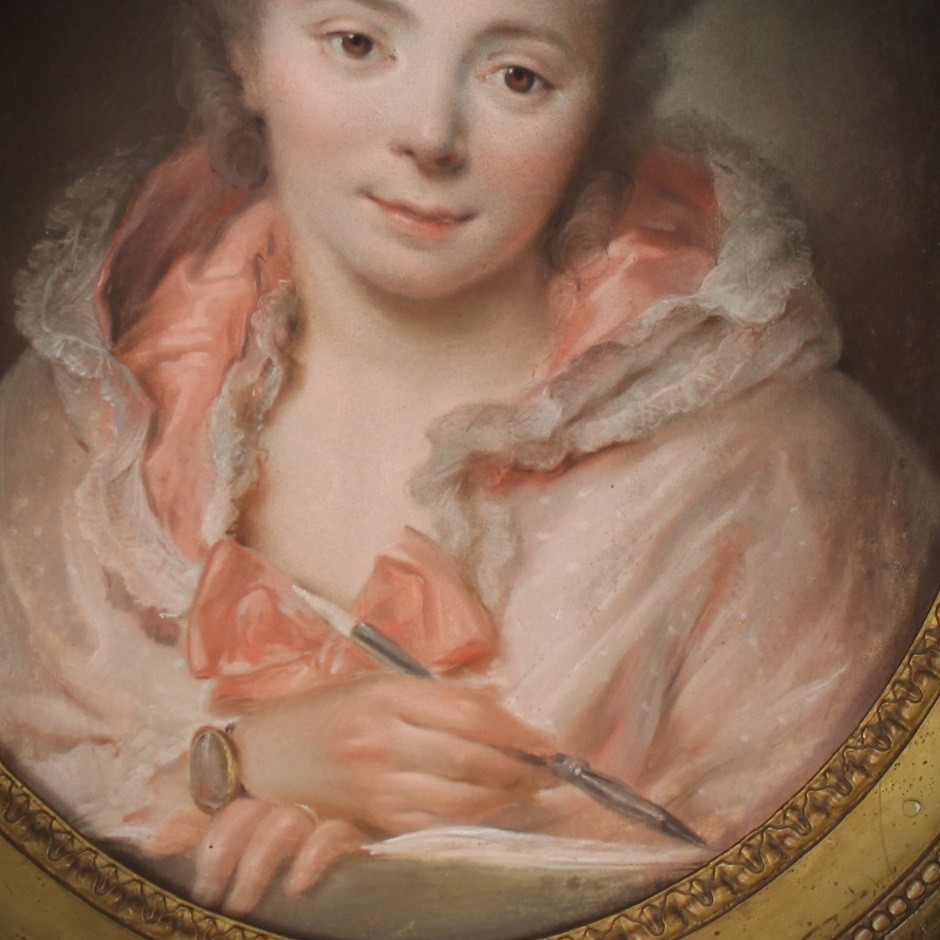
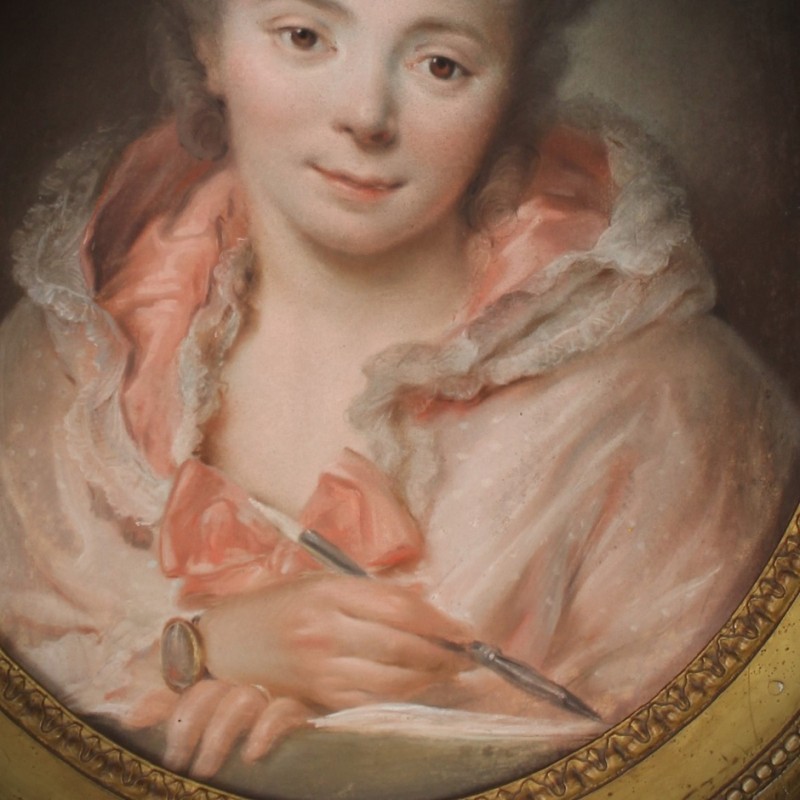
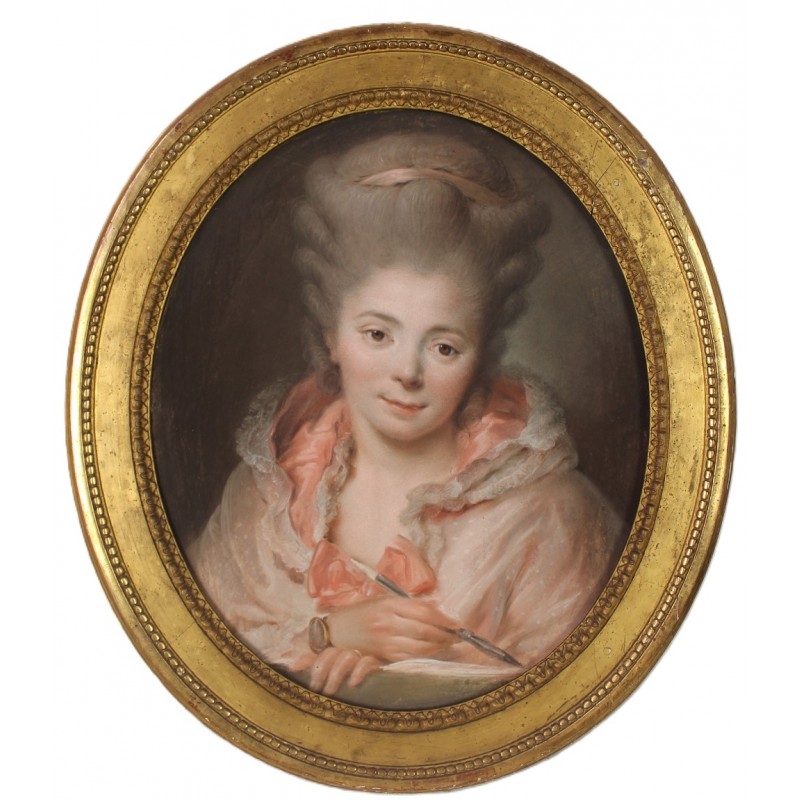
Pastel portraiture enjoyed its golden age in the 18th century, practiced by many artists to meet the demands of an ever-growing clientele who wished to have their portraits painted. The success of this technique in Paris was triggered in particular by the arrival of the Venetian Rosalba Carriera around 1720, who introduced an elegant, vaporous, and spontaneous style that appealed to Regency society. Pastel has many technical and aesthetic advantages over oil painting, notably its speed of execution, a major asset in portraiture, which allows the subject to pose for a short time without tiring. The artist could thus capture the liveliness of expression and the psychological truth of his subject. Our artist, like his contemporary pastel painters, played on the “flower of the pastel,” the last layer of unfixed powder, to give incomparable intensity, depth, and realism to the tones of the skin. This pastel is also mounted on a fragment of oil on canvas, albeit well executed, a sign of a certain disinterest in painting in favor of pastel among part of the population.
In the last quarter of the 18th century, female self-portraits, particularly in pastel, became a social phenomenon and a political manifesto, with more than sixty female self-portraits exhibited in the Salons between 1770 and 1804. Women used them to publicly claim their true status as artists. No longer the object of the male gaze, they became the subject of their own gaze and painted themselves as real individuals rather than mythical, historical, or allegorical figures. Several pastel artists were pioneers in this evolution, such as Marie-Suzanne Roslin, Adélaïde Labille-Guiard, and Gabrielle Capet, the daughter of a servant and a student of the former, who exhibited her own portrait at work in 1784, showing that art, and pastel in particular, could be a powerful vehicle for social advancement for women. In 1786, young students, encouraged by these successes, flocked to the Salon de la Jeunesse on Place Dauphine to exhibit their self-portraits. It is highly likely that our self-portrait was painted during these years by one of the most talented of these young artists. This surge of emancipation, particularly visible through pastel painting, was unfortunately halted by revolutionary institutions, such as the Société Populaire et Républicaine des Arts, which once again excluded women from the field of art from 1793 onwards.
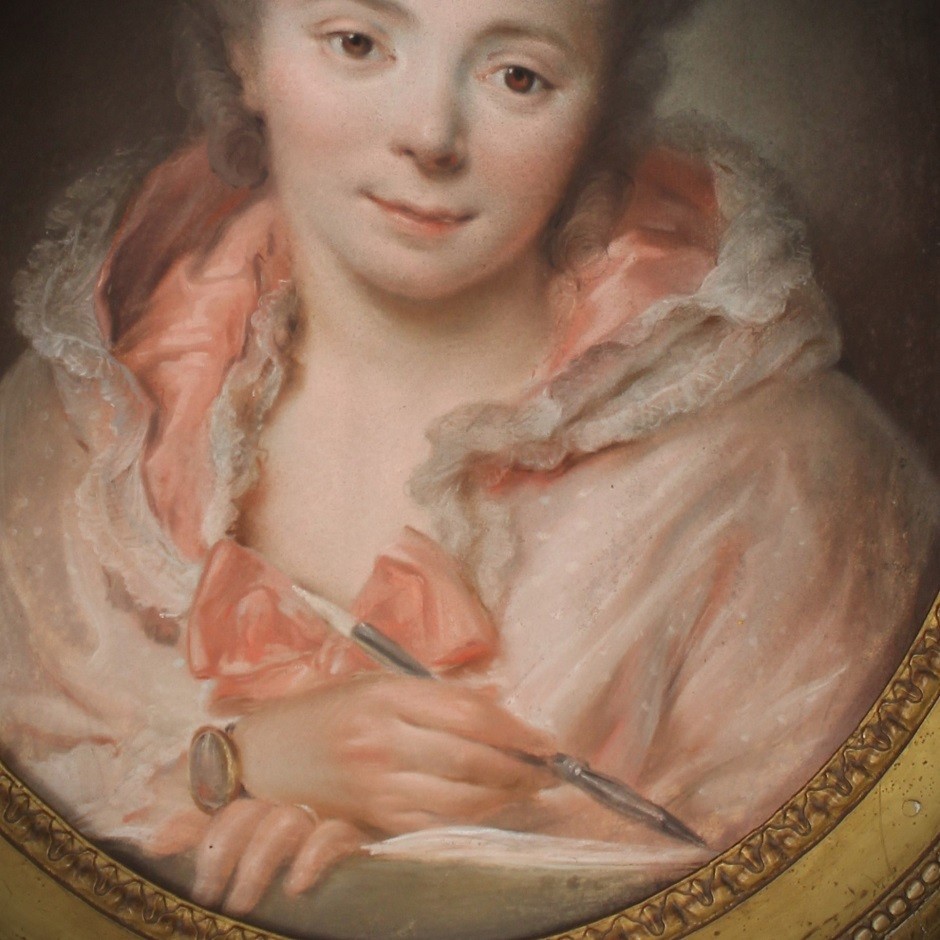
The talented artist of this charming, sensitive, and refined self-portrait, dominated by powdery pinks and pearly whites, looks at us. She reveals herself as much as she asserts herself.
Avis
Aucun avis n'a été publié pour le moment.