
 View larger
Alexandre Kucharski (1741-1819)
Demande d'informations
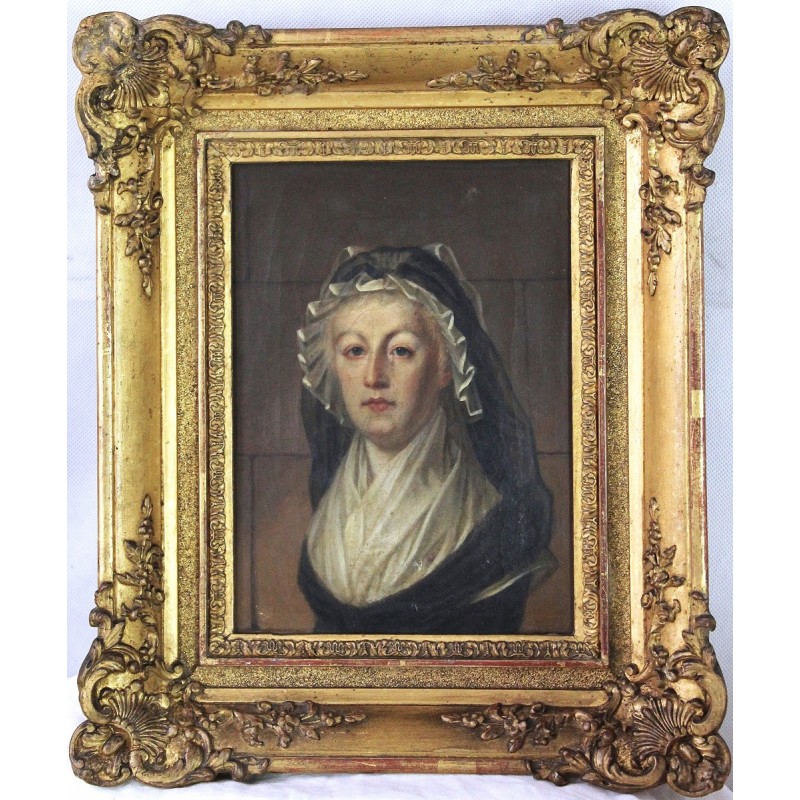
| Oil on canvas |
| 21,5 x 16 cm |
| Early 19th century |
| Provenance: |
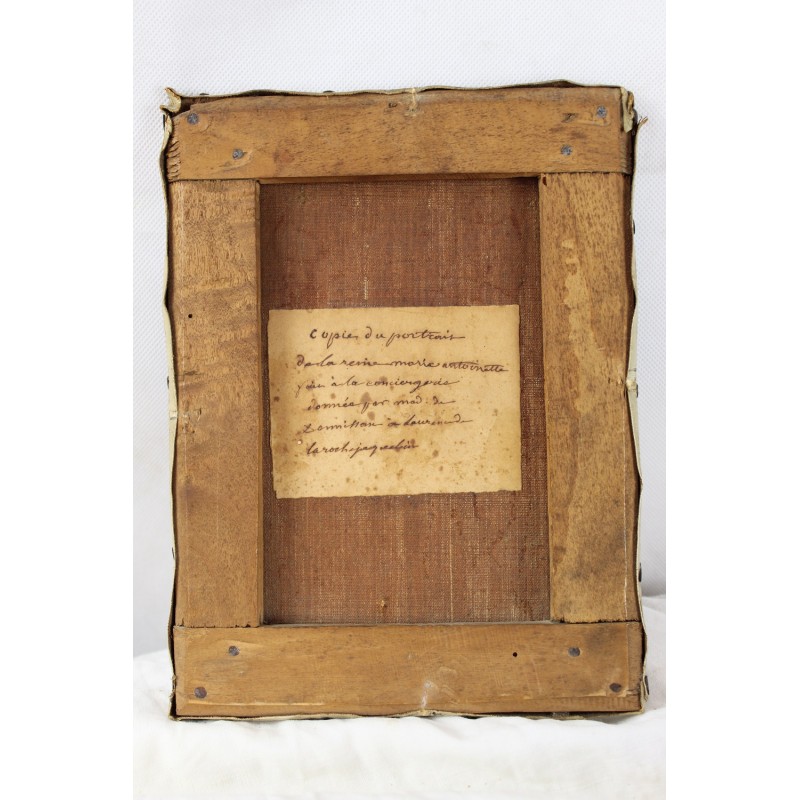
| - Marie-Louise-Victoire de Donnissan, marquise de Lescure puis de La Rochejaquelein |
| - Laurence du Vergier de La Rochejaquelein, sa fille, marié à Alfred Émilien d’Albertas (1790-1871) |
| - Château d’Albertas (Bouche du Rhône) |
More info
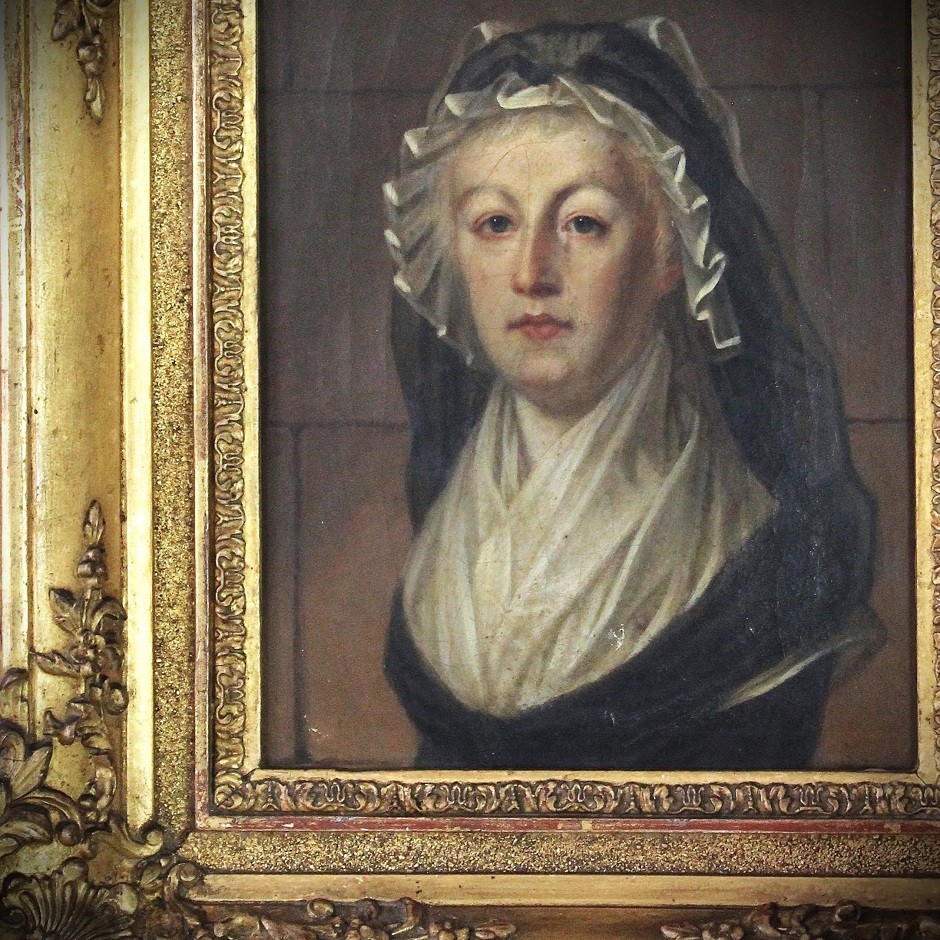
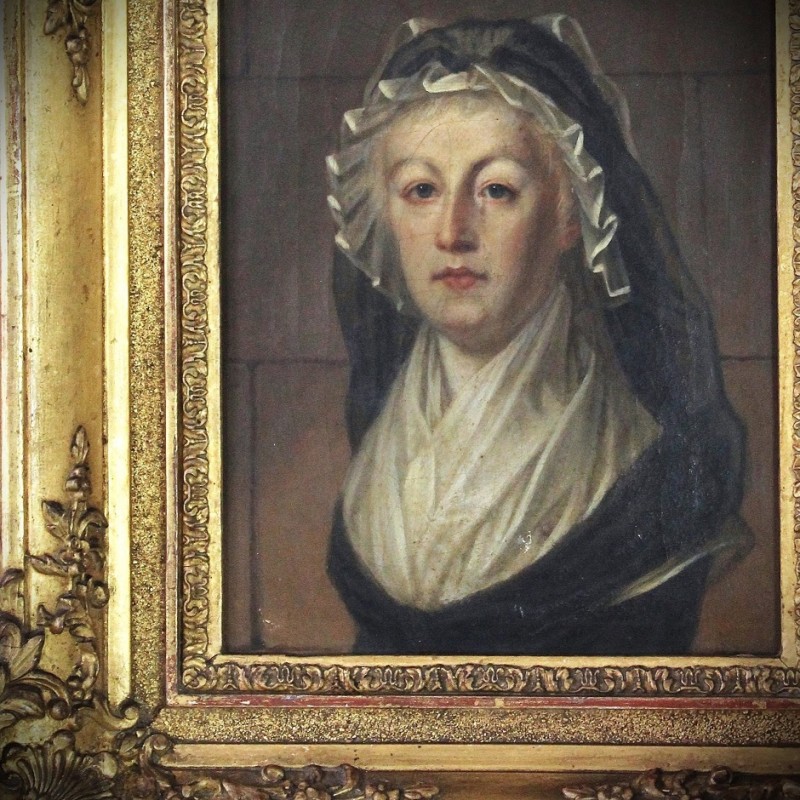
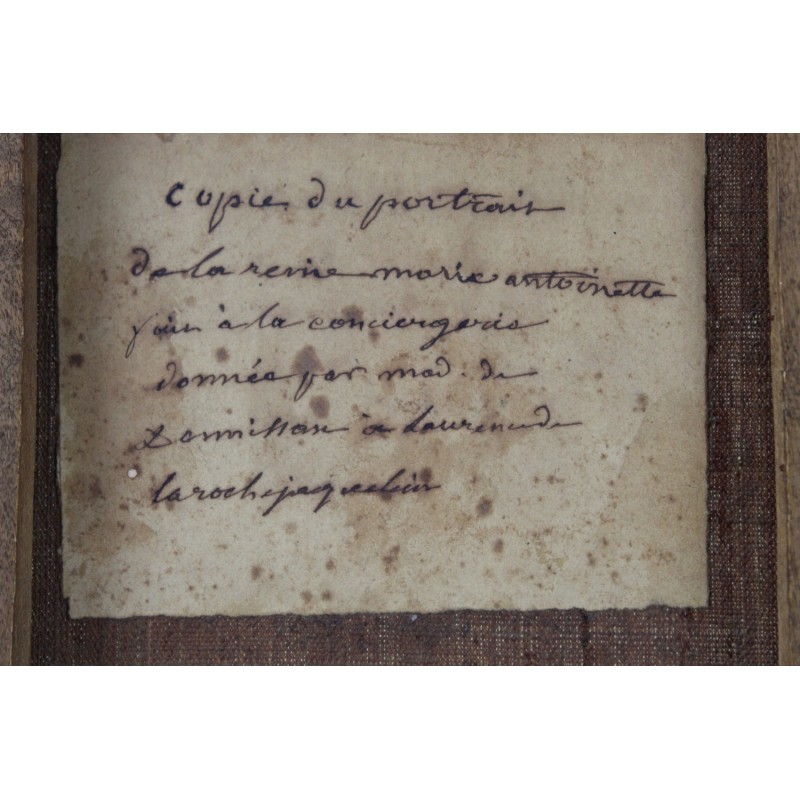
The Queen is depicted in the Temple, mourning the death of her husband, King Louis XVI.
Several replicas are known to exist, including one in Versailles and another in the Carnavalet Museum.
The painter Kucharski managed to enter the Temple prison between the execution of Louis XVI and the Queen's departure for the Conciergerie. He emerged with a portrait of Marie Antoinette dressed in widow's weeds. Lost during the sacking of the Tuileries Palace, it is difficult to know whether the portrait kept at Versailles and the one kept at the Carnavalet Museum are the first drafts. Other sources tell us that the original was done in pastel, then given to the Princess of Taranto, then inherited by her sister, the Marquise de Crussol, but was probably destroyed during World War II.
This portrait of Marie Antoinette in deep mourning was replicated in oil and pastel, both by Kucharski himself and by other painters of the time. Marie Antoinette's close friends wanted the last portrait of the Queen, an image that was so important and moving.
Our work is one such replica. Its style and pictorial quality are very similar to that preserved at the Musée de Carnavalet. It is clearly by the same artist. The dimensions are also identical.
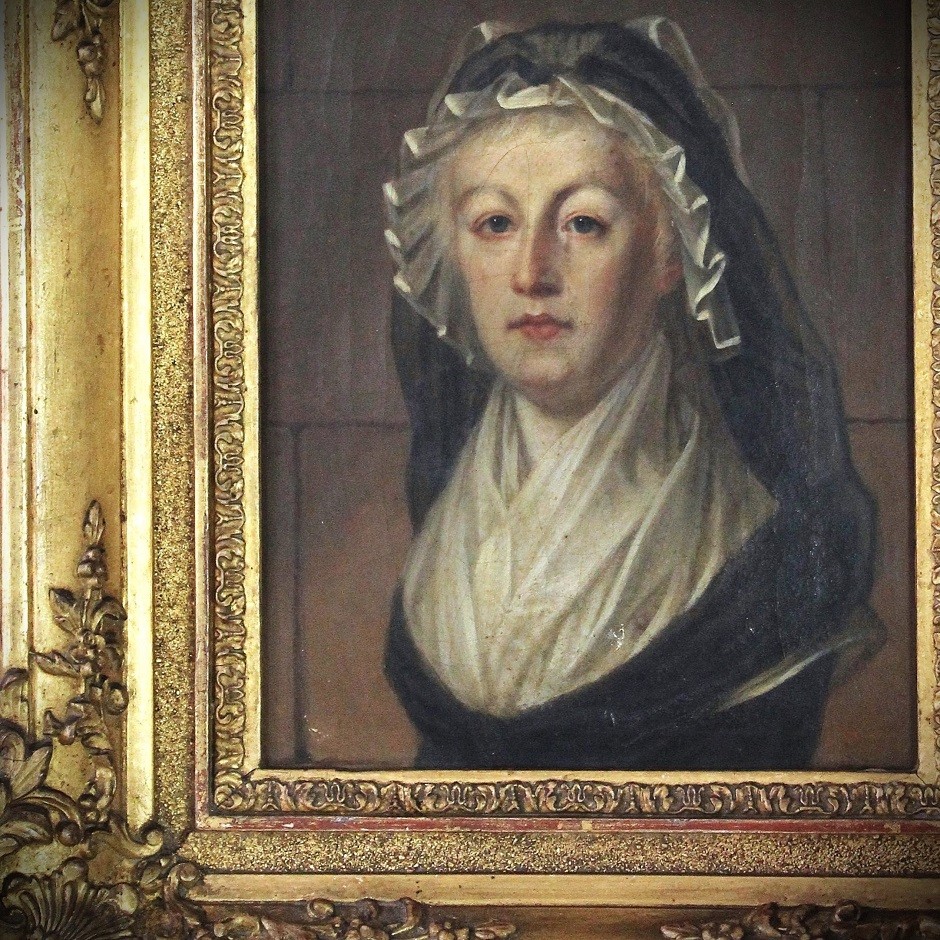
Its provenance makes it all the more moving, as this portrait belonged to Marie-Louise-Victoire de Donnissan, Marquise de Lescure and later de La Rochejaquelein.
Born in Versailles on October 25, 1772, and died on February 15, 1857, in Orléans, Victoire, also known as Victorine de Donnisssan, married General de Lescure in her first marriage. With unparalleled heroism, she followed and supported the Saint of Poitou until his death during the Galerne expedition.
After years of being hunted by the Blues, during which she lived in anguish, separation, mourning, flight, and retreat, she married Louis de La Rochejaquelein, Henri's younger brother, on March 1, 1802. Victorine then relearned how to live, smile, and laugh with the eight children born of this happy union despite everything. In 1815, he too died in battle defending King Louis XVIII.
In 1857, at the age of eighty-five, the woman who had seen the reigns of Louis XV, Louis XVI, the Convention, the Directory, the Consulate, the Empire, the return of the Bourbons, the July Monarchy, the Second Republic, and the rise of the Second Empire, the woman who had known the splendor of Versailles and the Galerne affair, the laughter of Trianon and the tears of Savenay, twice widowed, having lost six of her ten children, having fought the good fight, Victoire fell asleep the sleep of the just, at home, in her bed, in Orléans. In accordance with her wishes, she was buried in the Vendée region, where she had seen death so many times, near all her comrades in arms. "
Her memoirs, entitled Mémoires de Madame de La Rochejaquelein, are undoubtedly the most famous account of the War in the Vendée.
Source: Ménie Grégoire, La Marquise aux pieds nus: Victoire de la Rochejaquelein, Ed. De Fallois, Paris, 2010.
Avis
Aucun avis n'a été publié pour le moment.