Spread the world

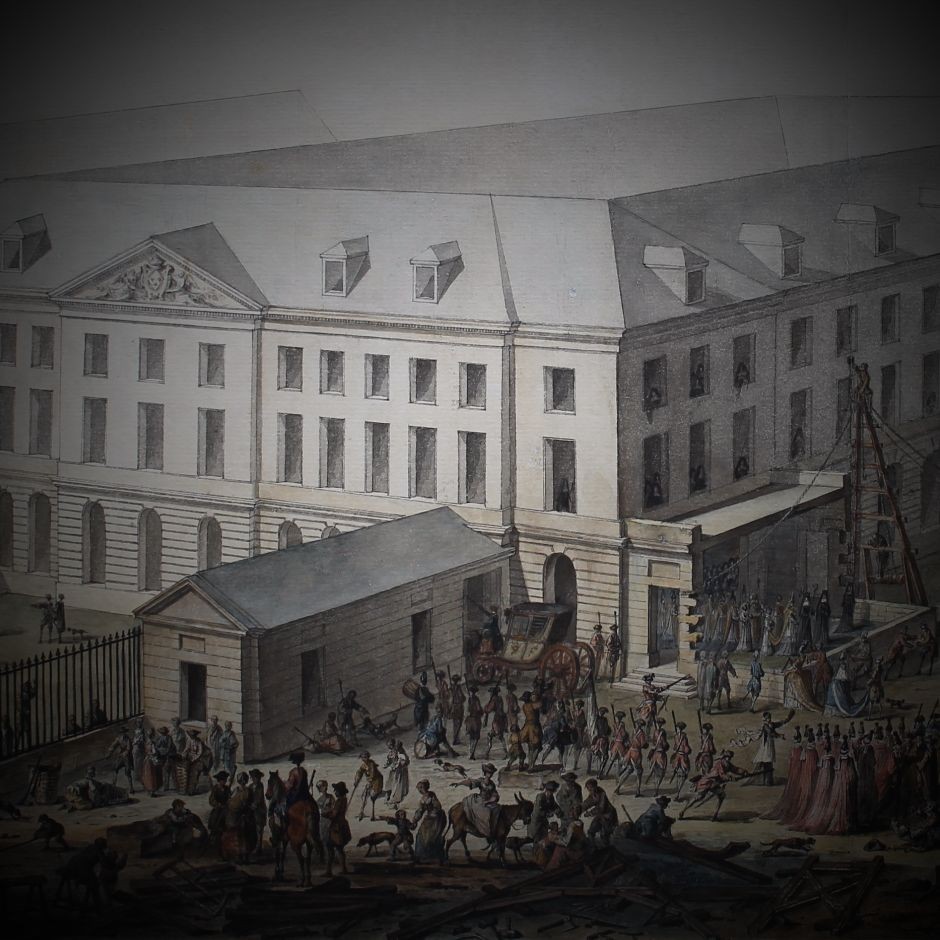
Notre Dame aux Nonnains in Troyes (now the prefecture)

18th-century French

Demande d'informations

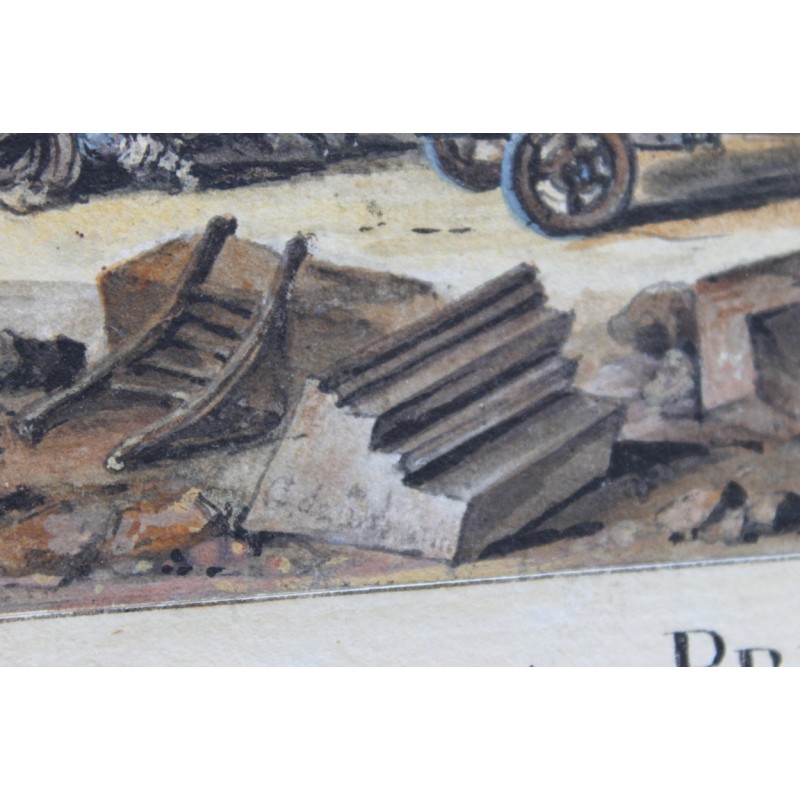
Illegible signature at the bottom of a cornice stone.
Annotated in the bottom right corner in brown ink: ‘Based on the drawings and advice of Mr. de Labrière, architect.’
Pen, black ink, grey wash and watercolour. Two sheets juxtaposed
38,5 x 65,5 cm
Circa 1778
Dans un encadrement en bois mouluré, sculpté et doré de frise de perles et de rais de coeur d'époque Louis XVI

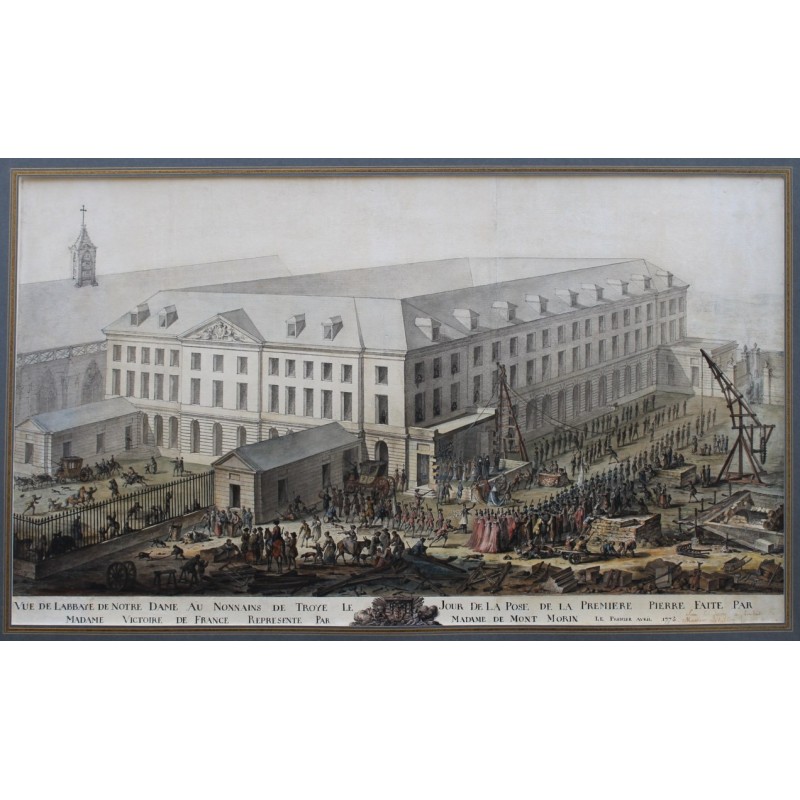
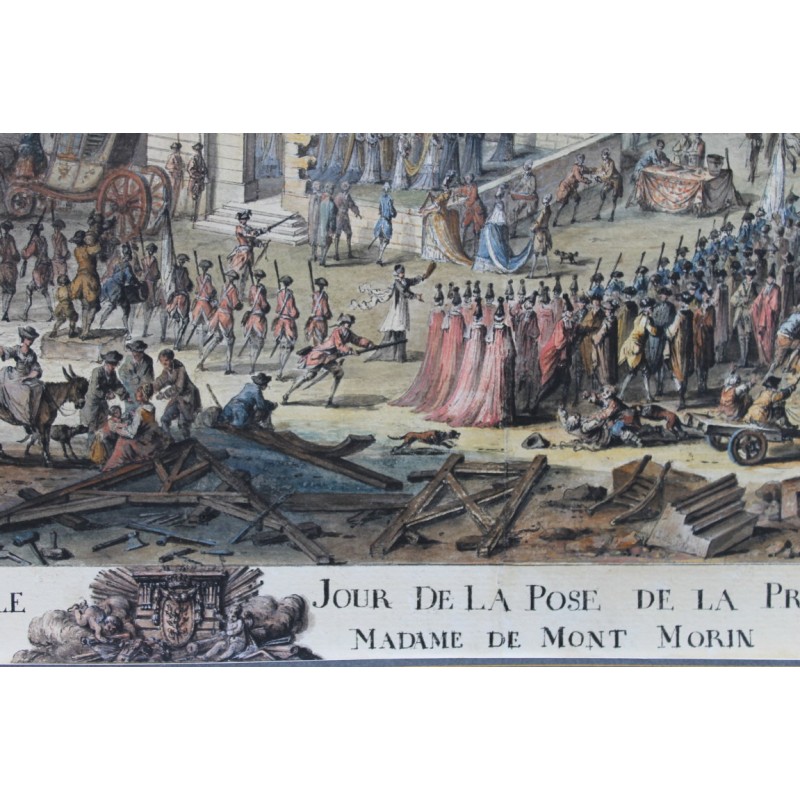
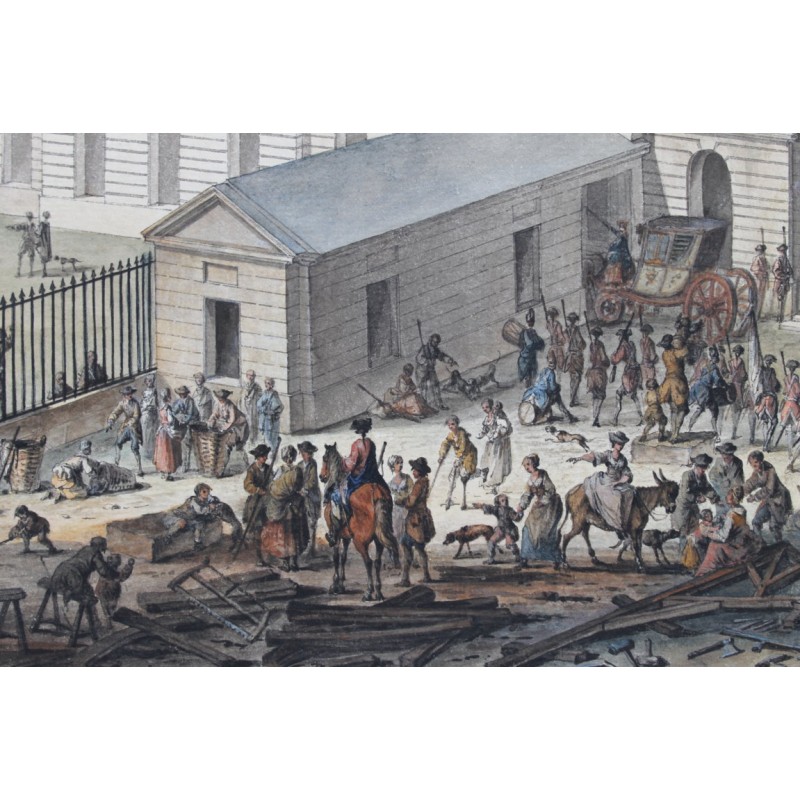
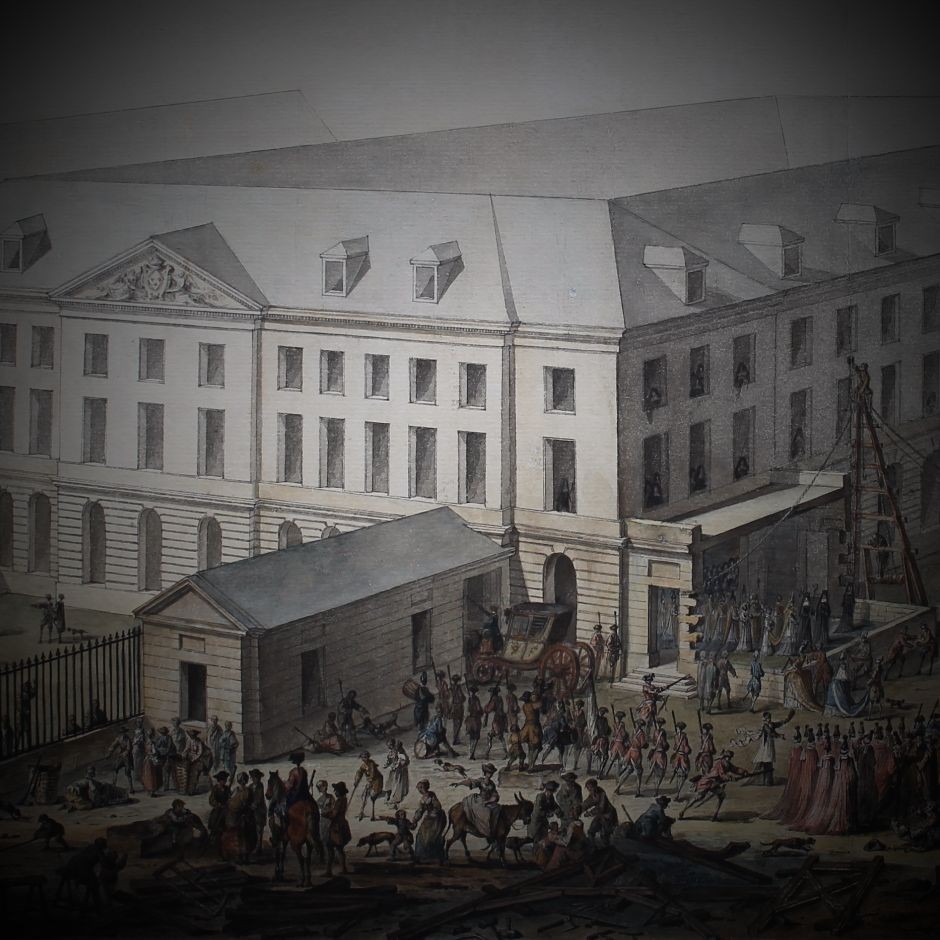
Captioned in pen at the bottom: ‘View of Labbaye de Notre Dame au Nonnains de Troye on the day the first stone was laid by Madame Victoire de France, represented by Madame de Mont Morin, on 1 April 1778’, and, in the centre, in ink and wash in grisaille, the Créquy coat of arms surmounted by a count's crown and framed by an allegory of architecture.

The error in the date. In fact, this event took place on 30 April, not 1 April.

However, there are three differences to note: the absence of certain figures, the lack of a signature, and the Créquy family coat of arms replaced by the abbess's initials.

Another drawing is kept in the Aube archives, which also has a few variations.

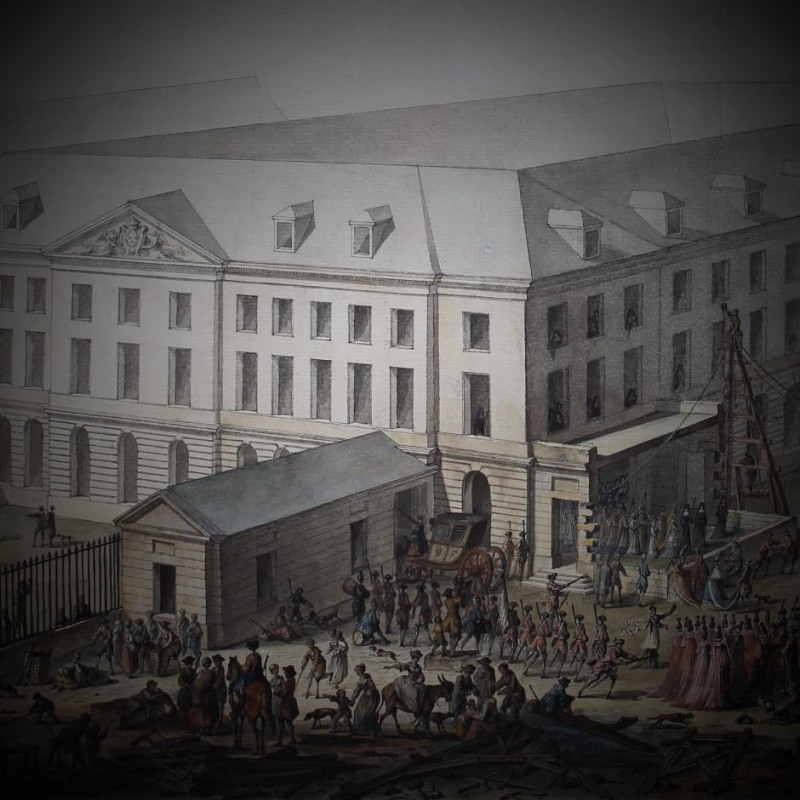
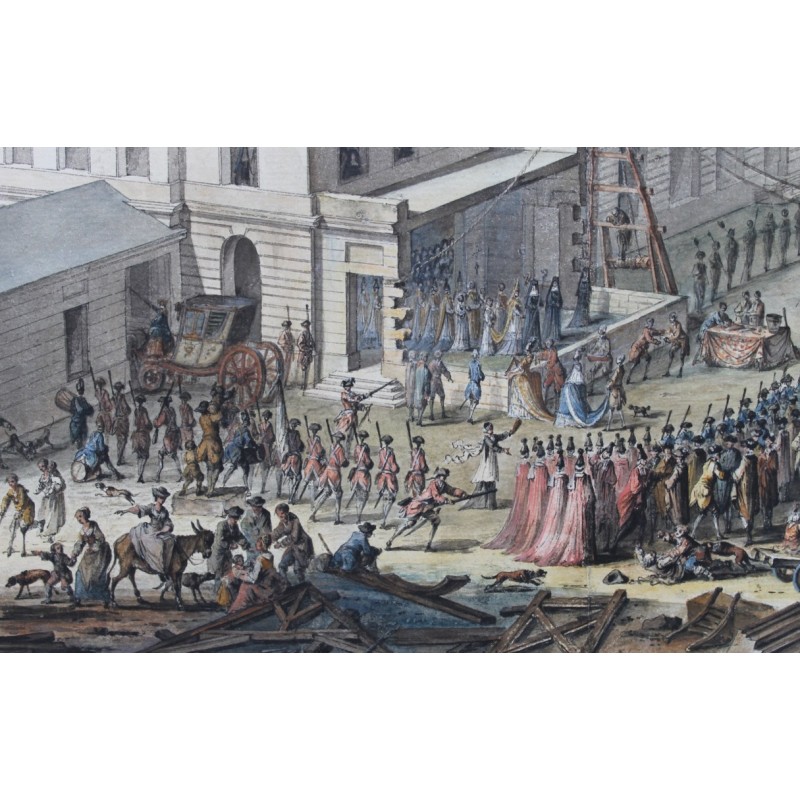
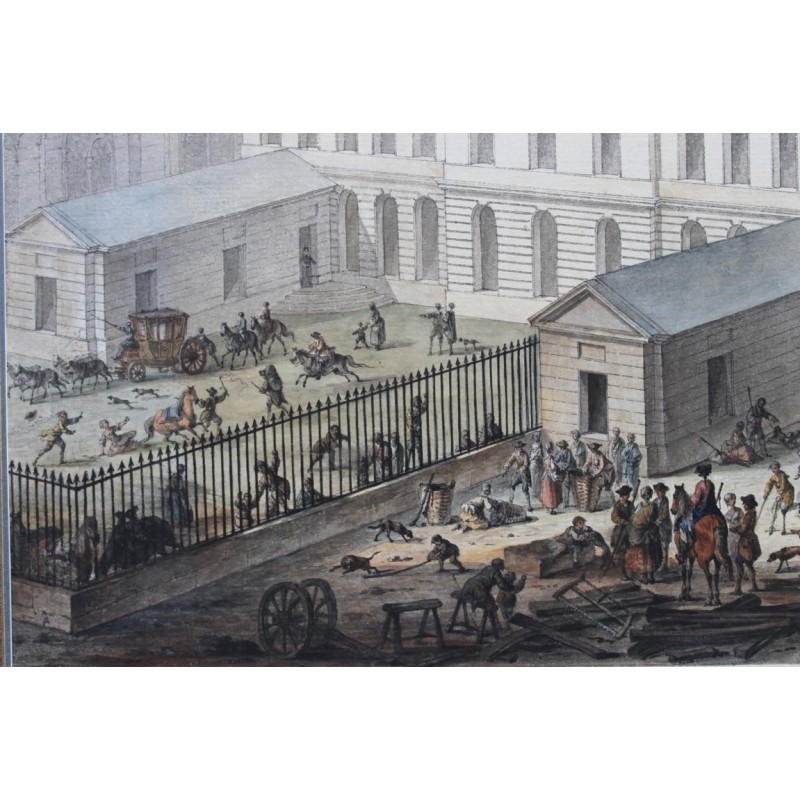
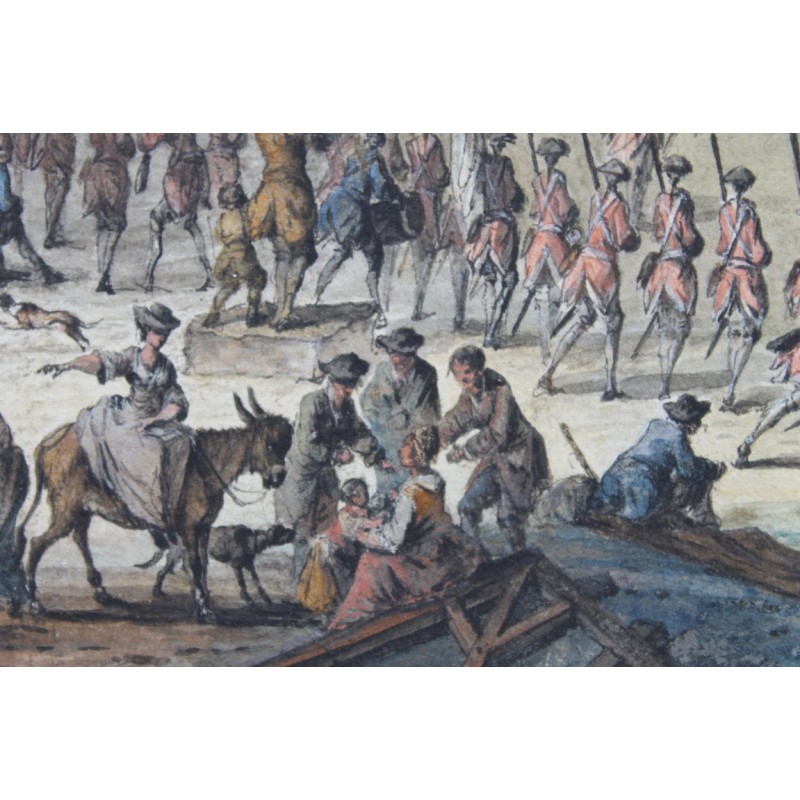
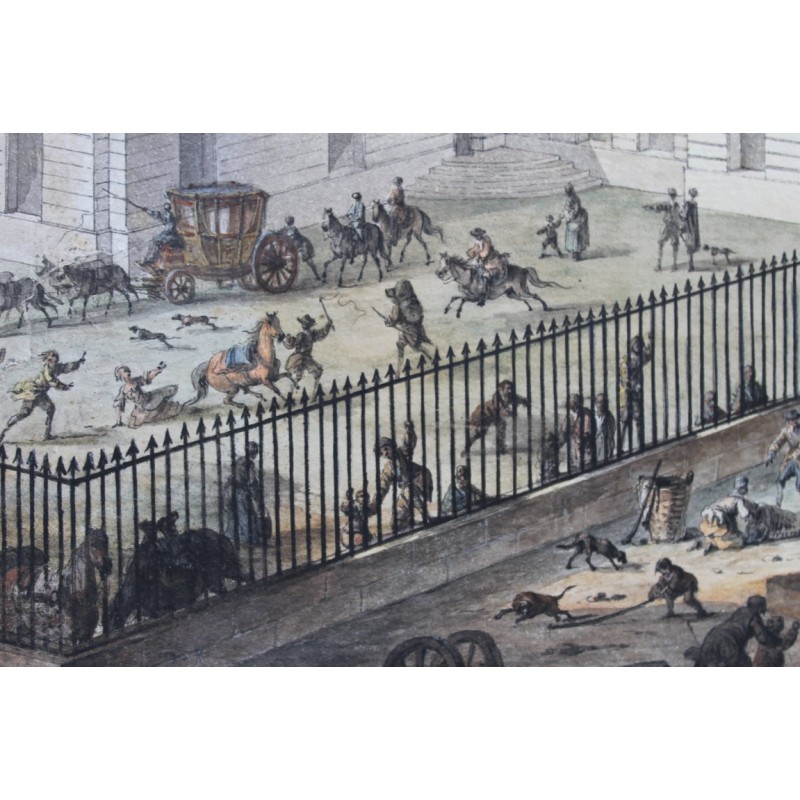
Our drawing, admirable both for its historical and aesthetic value, was executed with skill, talent, and humour in an unusually large format. Combining architectural drawing and genre scenes, it is a beautiful testimony to what such an event might have been like at the end of the 18th century.

Alexandre-Louis Etable de La Brière:


Alexandre-Louis Etable de Labrière is best known for designing the park at Versailles-Montreuil, the estate of Madame Elisabeth, sister of Louis XVI, between 1772 and 1782, when he was the King's architect.

He was a renowned architect: he became architect of the King's hunting grounds in 1786 and worked for the Count of Artois at Bagatelle, for the Count of Vaudreuil, the Prince of Luxembourg, the Duke of Lauzin and the Guéménée family, before their bankruptcy.

History of Notre-Dame aux Nonnains Abbey:


Notre-Dame aux Nonnains Abbey, whose history dates back to Gallo-Roman times, functioned as a religious institution during the reign of Charlemagne. It was the most important abbey in the diocese of Troyes.

On 23 July 1188, during the Troyes fairs, a violent fire destroyed the city's most beautiful buildings. The cathedral and Notre-Dame aux Nonnains Abbey were engulfed in flames. Several nuns perished and all the archives went up in smoke.

The Count of Champagne then had the abbey rebuilt, while Bishop Manassés renewed the nuns' privileges.

Rebuilt and remodelled several times, constructed of chalk or cob, the abbey was home to a community of nuns whose disputes with the papacy and the bishopric were sometimes so heated that they were excommunicated in 1448. This sanction seemed to put an end to the unrest, and the archives mention little more than disputes over investitures.

At the end of the 17th century, the church and convent buildings, which dated back to the Middle Ages, were in a deplorable state of disrepair.

Partial renovations continued until Abbess Françoise-Lucie de Montmorin finally obtained the necessary subsidies from the king to rebuild the abbey. She called upon the Parisian architect Alexandre-Louis Etable de La Brière: thus, on 30 April 1778, and not 1 April, the first stone was laid with great pomp by the Marquise de Montmorin, the abbess's sister-in-law, acting on behalf of Madame Victoire de France, the King's aunt.

Despite the initial enthusiasm, work stopped in 1781 due to a lack of funds. Of the four main buildings designed by La Brière, only the north one was completed. The one facing Place Notre-Dame was left unfinished and the two planned wings were reduced in size. Part of the medieval buildings was preserved and remained in place until the reign of Louis-Philippe.

The twenty-seven nuns present on the premises during the French Revolution remained in the abbey until its confiscation in 1792. After their departure, the furnishings of the convent and church disappeared under the fire of auctions.

Over the years, the Abbey of Notre-Dame aux Nonnains was used only as a warehouse, lodgings, library, museum and archive. The attics were filled with precious objects and books taken from surrounding churches and abbeys.

In 1794, the State, owner of the former abbey, sold part of it to the department for an annual rent of 1,113 francs.


In 1838, faced with the dilapidated state of the buildings, the General Council renovated the façade and created a courtyard of honour in front of it, enclosed by a gate connected to two small guardhouses. The building retained this appearance until 1892.

On 7 May 1892, the prefecture was ravaged by a fire that destroyed the attic and the northern part of the building.

The idea of renovating the former abbey was then raised. In 1894, after examining numerous architectural plans, the project was entrusted to Mr Drouard, the departmental architect. The work took five years, but by 1896 it was sufficiently advanced for the prefectural administration to move into its new premises.

The building then underwent several modifications, mainly ornamental.

Today, the Aube Prefecture still resides in the former Notre-Dame aux Nonnains Abbey.

The laying of the foundation stone for the new building:


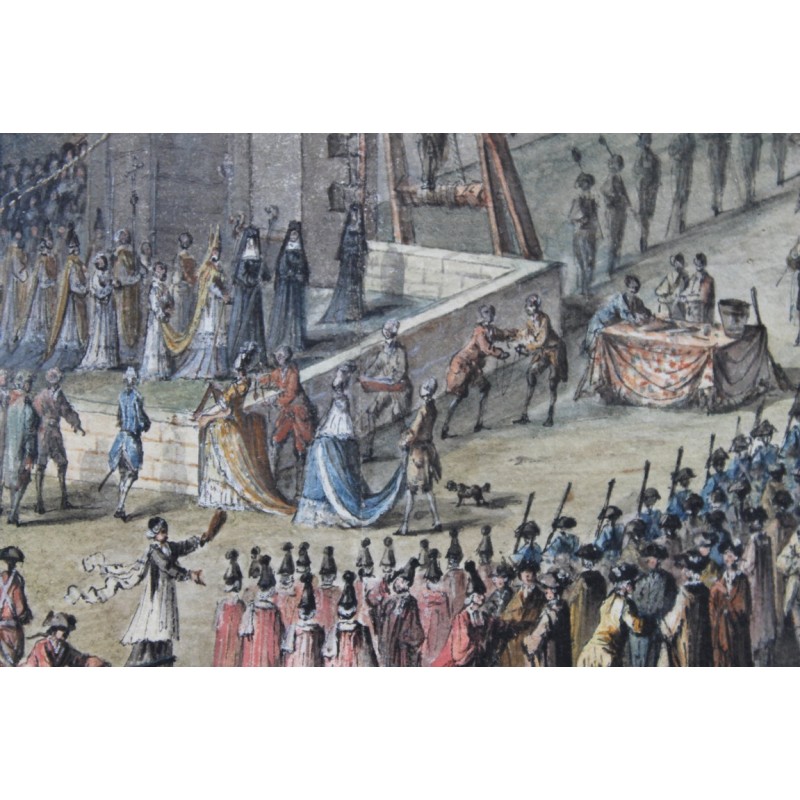
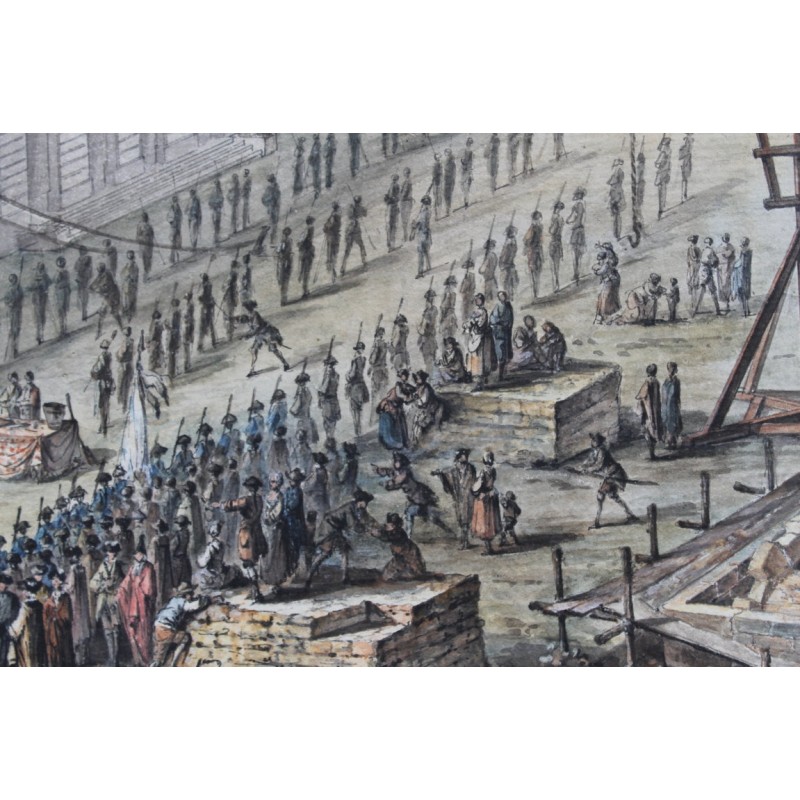
This ceremony took place on 30 April 1778 amid great solemnity, with large processions accompanied by musicians and choirs. It was presided over by Monsignor Claude-Matthias-Joseph de Barral, Bishop of Troyes, dressed in his pontifical robes, with his usual retinue, preceded by the archdeacons, vicars general, and chapter of the cathedral church...

The list of dignitaries present, both clergy and laity, is long. But one must also imagine a multitude of people of all ages, sexes and conditions, from the city and the suburbs, whom love and attachment for their King had drawn to the ceremony held in the princess's name. They filled the squares, lined the streets and crowded the windows of every floor of the houses.

Madame Victoire-Louise-Marie-Thérèse de France, daughter of Louis XV and aunt of Louis XVI, wanted to show her goodwill to the royal abbey of Notre-Dame aux Nonnains and to the Abbess of Montmorin, as proof of her esteem for her. She decided to do her the honour of laying the first stone of the new building. However, particular circumstances prevented her from performing the ceremony. She therefore asked the Marquise de Montmorin, the abbess's sister-in-law, to represent her.

In addition to the coats of arms of Madame Victoire de France, those of the Marquise de Montmorin combined with those of her husband, and those of the abbess, the following inscription was engraved on the stone: "This monastery was built with the generosity of Louis XVI. The first stone was laid on the thirtieth of April, seventeen hundred and seventy-eight, by the Most High and Most Powerful and Excellent Lady Victoire Louise Marie-Thérèse de France, Aunt of the King, Protector and Benefactor of this House. She was represented by Dame Marguerite Morin de Banneville, wife of Messire Jean-Baptiste François Marquis de Montmorin, Knight Commander of the King's Orders, Governor of the Town and Castle of Fontainebleau, Captain of His Majesty's Hunts and Lieutenant-General of his Armies. Madame Françoise-Lucie de Montmorin, Abbess of this Abbey. The stone was blessed by Monseigneur Claude Matthias-Joseph de Barral, Bishop of Troyes, in the presence of the Cathedral Chapter and the Municipal Council. The construction was carried out according to the plans and under the direction of Mr Louis de la Brière, Inspector, Sieur Gentil, and built by Gaugé, Master Mason of Paris.

As we can see in our drawing, in order to perform the ceremony, all the necessary instruments were placed on a table set up for this purpose next to the place where the foundation stone was to be laid. The workers labouring on the foundations of the new building were lined up in order, led by the company's managers. These instruments were taken from the table by Mr Gaugé, Master Mason, who handed them successively to Mr Gentil, works inspector, who in turn handed them to Mr de la Brière, the abbess's architect. The latter presented them to Madame la Marquise de Montmorin, who received them and used them to lay the first stone. After the ceremony, His Grace the Bishop recited the prayer used on such occasions and concluded by giving the pontifical blessing to the sound of fanfares, trumpets, drums and other instruments. They left in procession to the church, as they had arrived.

In the evening, fireworks were set off in front of the Marquise de Montmorin's apartment. The next day, a mass was said for His Majesty and the Royal Family, after which bread was distributed to the poor.

Demande d'informations à propos de Notre Dame aux Nonnains in Troyes (now the prefecture) 18th-century French


More info

The error in the date. In fact, this event took place on 30 April, not 1 April.

However, there are three differences to note: the absence of certain figures, the lack of a signature, and the Créquy family coat of arms replaced by the abbess's initials.

Another drawing is kept in the Aube archives, which also has a few variations.

Our drawing, admirable both for its historical and aesthetic value, was executed with skill, talent, and humour in an unusually large format. Combining architectural drawing and genre scenes, it is a beautiful testimony to what such an event might have been like at the end of the 18th century.

Alexandre-Louis Etable de La Brière:


Alexandre-Louis Etable de Labrière is best known for designing the park at Versailles-Montreuil, the estate of Madame Elisabeth, sister of Louis XVI, between 1772 and 1782, when he was the King's architect.

He was a renowned architect: he became architect of the King's hunting grounds in 1786 and worked for the Count of Artois at Bagatelle, for the Count of Vaudreuil, the Prince of Luxembourg, the Duke of Lauzin and the Guéménée family, before their bankruptcy.

History of Notre-Dame aux Nonnains Abbey:


Notre-Dame aux Nonnains Abbey, whose history dates back to Gallo-Roman times, functioned as a religious institution during the reign of Charlemagne. It was the most important abbey in the diocese of Troyes.

On 23 July 1188, during the Troyes fairs, a violent fire destroyed the city's most beautiful buildings. The cathedral and Notre-Dame aux Nonnains Abbey were engulfed in flames. Several nuns perished and all the archives went up in smoke.

The Count of Champagne then had the abbey rebuilt, while Bishop Manassés renewed the nuns' privileges.

Rebuilt and remodelled several times, constructed of chalk or cob, the abbey was home to a community of nuns whose disputes with the papacy and the bishopric were sometimes so heated that they were excommunicated in 1448. This sanction seemed to put an end to the unrest, and the archives mention little more than disputes over investitures.

At the end of the 17th century, the church and convent buildings, which dated back to the Middle Ages, were in a deplorable state of disrepair.

Partial renovations continued until Abbess Françoise-Lucie de Montmorin finally obtained the necessary subsidies from the king to rebuild the abbey. She called upon the Parisian architect Alexandre-Louis Etable de La Brière: thus, on 30 April 1778, and not 1 April, the first stone was laid with great pomp by the Marquise de Montmorin, the abbess's sister-in-law, acting on behalf of Madame Victoire de France, the King's aunt.

Despite the initial enthusiasm, work stopped in 1781 due to a lack of funds. Of the four main buildings designed by La Brière, only the north one was completed. The one facing Place Notre-Dame was left unfinished and the two planned wings were reduced in size. Part of the medieval buildings was preserved and remained in place until the reign of Louis-Philippe.

The twenty-seven nuns present on the premises during the French Revolution remained in the abbey until its confiscation in 1792. After their departure, the furnishings of the convent and church disappeared under the fire of auctions.

Over the years, the Abbey of Notre-Dame aux Nonnains was used only as a warehouse, lodgings, library, museum and archive. The attics were filled with precious objects and books taken from surrounding churches and abbeys.

In 1794, the State, owner of the former abbey, sold part of it to the department for an annual rent of 1,113 francs.


In 1838, faced with the dilapidated state of the buildings, the General Council renovated the façade and created a courtyard of honour in front of it, enclosed by a gate connected to two small guardhouses. The building retained this appearance until 1892.

On 7 May 1892, the prefecture was ravaged by a fire that destroyed the attic and the northern part of the building.

The idea of renovating the former abbey was then raised. In 1894, after examining numerous architectural plans, the project was entrusted to Mr Drouard, the departmental architect. The work took five years, but by 1896 it was sufficiently advanced for the prefectural administration to move into its new premises.

The building then underwent several modifications, mainly ornamental.

Today, the Aube Prefecture still resides in the former Notre-Dame aux Nonnains Abbey.

The laying of the foundation stone for the new building:


This ceremony took place on 30 April 1778 amid great solemnity, with large processions accompanied by musicians and choirs. It was presided over by Monsignor Claude-Matthias-Joseph de Barral, Bishop of Troyes, dressed in his pontifical robes, with his usual retinue, preceded by the archdeacons, vicars general, and chapter of the cathedral church...

The list of dignitaries present, both clergy and laity, is long. But one must also imagine a multitude of people of all ages, sexes and conditions, from the city and the suburbs, whom love and attachment for their King had drawn to the ceremony held in the princess's name. They filled the squares, lined the streets and crowded the windows of every floor of the houses.

Madame Victoire-Louise-Marie-Thérèse de France, daughter of Louis XV and aunt of Louis XVI, wanted to show her goodwill to the royal abbey of Notre-Dame aux Nonnains and to the Abbess of Montmorin, as proof of her esteem for her. She decided to do her the honour of laying the first stone of the new building. However, particular circumstances prevented her from performing the ceremony. She therefore asked the Marquise de Montmorin, the abbess's sister-in-law, to represent her.

In addition to the coats of arms of Madame Victoire de France, those of the Marquise de Montmorin combined with those of her husband, and those of the abbess, the following inscription was engraved on the stone: "This monastery was built with the generosity of Louis XVI. The first stone was laid on the thirtieth of April, seventeen hundred and seventy-eight, by the Most High and Most Powerful and Excellent Lady Victoire Louise Marie-Thérèse de France, Aunt of the King, Protector and Benefactor of this House. She was represented by Dame Marguerite Morin de Banneville, wife of Messire Jean-Baptiste François Marquis de Montmorin, Knight Commander of the King's Orders, Governor of the Town and Castle of Fontainebleau, Captain of His Majesty's Hunts and Lieutenant-General of his Armies. Madame Françoise-Lucie de Montmorin, Abbess of this Abbey. The stone was blessed by Monseigneur Claude Matthias-Joseph de Barral, Bishop of Troyes, in the presence of the Cathedral Chapter and the Municipal Council. The construction was carried out according to the plans and under the direction of Mr Louis de la Brière, Inspector, Sieur Gentil, and built by Gaugé, Master Mason of Paris.

As we can see in our drawing, in order to perform the ceremony, all the necessary instruments were placed on a table set up for this purpose next to the place where the foundation stone was to be laid. The workers labouring on the foundations of the new building were lined up in order, led by the company's managers. These instruments were taken from the table by Mr Gaugé, Master Mason, who handed them successively to Mr Gentil, works inspector, who in turn handed them to Mr de la Brière, the abbess's architect. The latter presented them to Madame la Marquise de Montmorin, who received them and used them to lay the first stone. After the ceremony, His Grace the Bishop recited the prayer used on such occasions and concluded by giving the pontifical blessing to the sound of fanfares, trumpets, drums and other instruments. They left in procession to the church, as they had arrived.

In the evening, fireworks were set off in front of the Marquise de Montmorin's apartment. The next day, a mass was said for His Majesty and the Royal Family, after which bread was distributed to the poor.

Avis

Aucun avis n'a été publié pour le moment.

Donnez votre avis

Notre Dame aux Nonnains in Troyes (now the prefecture)

Notre Dame aux Nonnains in Troyes (now the prefecture)

Captioned in pen at the bottom: ‘View of Labbaye de Notre Dame au Nonnains de Troye on the day the first stone was laid by Madame Victoire de France, represented by Madame de Mont Morin, on 1 April 1778’, and, in the centre, in ink and wash in grisaille, the Créquy coat of arms surmounted by a count's crown and framed by an allegory of architecture.