
 View larger
House of Joan of Arc after its restoration
Demande d'informations
| Oil on canvas |
| Monogrammed J.B. lower left |
| 32,5 x 41,5 cm |
| Circa 1820 |

More info
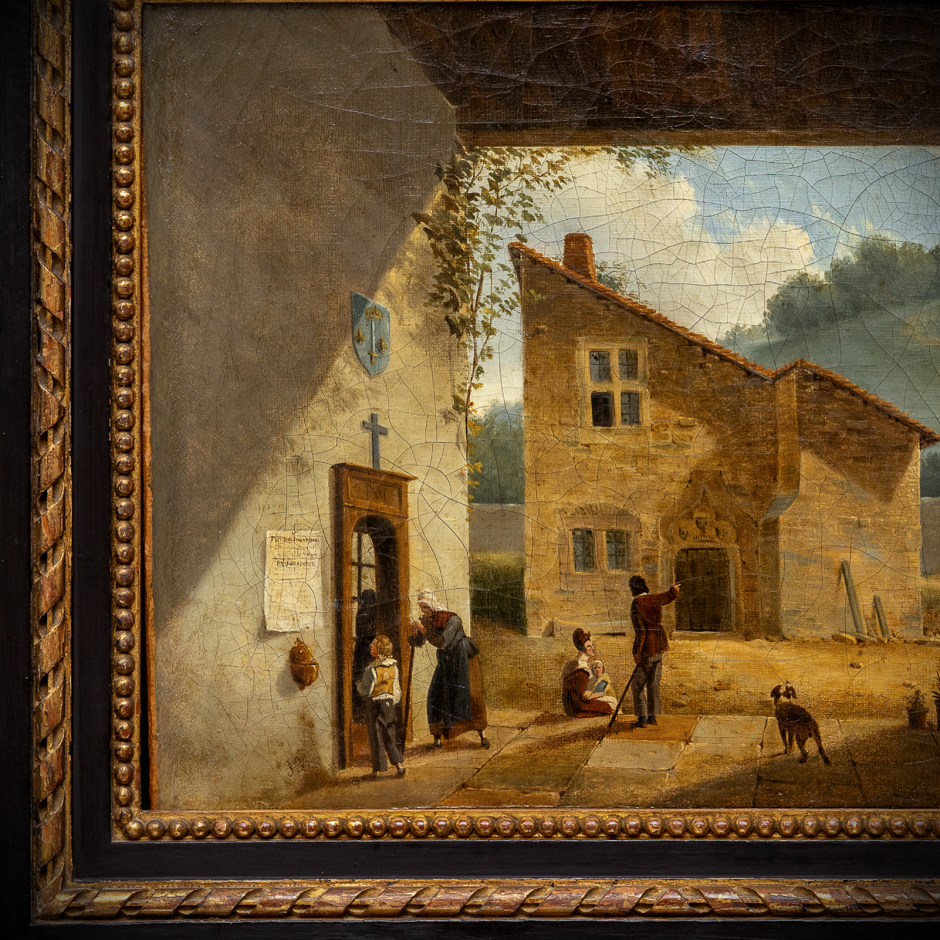
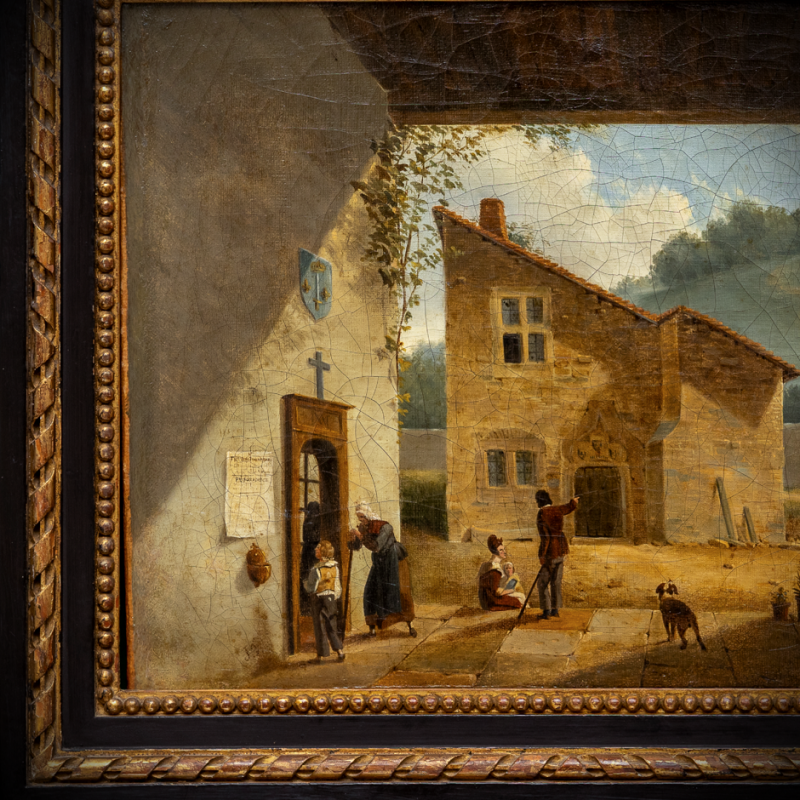
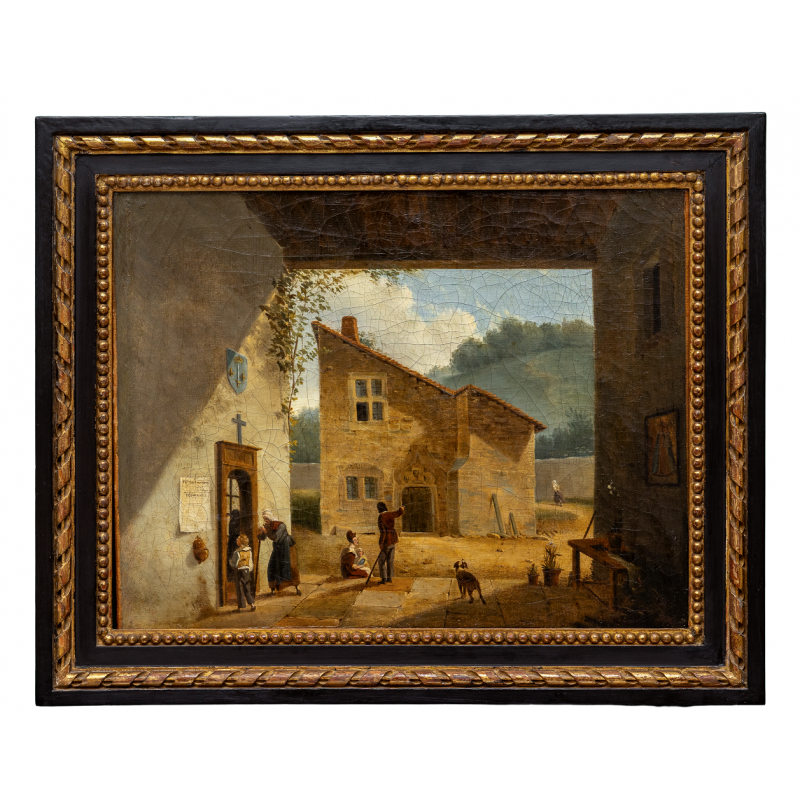
Jeanne d'Arc's birthplace is a medieval-style house dating from the 15th century, located on a few hectares of land in Domrémy-la-Pucelle in the Vosges, belonging to her parents, Jacques d'Arc and Isabelle Rommée. Jeanne was born there around 1412 and spent her childhood there. It was in the adjoining garden that she first heard the voices. Identified as early as the 15th century, the house underwent numerous transformations and fell into serious disrepair. In the 18th century, it was converted into a simple farm shed and modern buildings were added to it. In 1818, following historical work that sparked a new craze for the figure of Joan of Arc, the Vosges General Council bought the house. In 1820, King Louis XVIII financed the restoration of the house, led by engineer Jean-Baptiste-Prosper Jollois, who had the neighboring modern buildings demolished to highlight the four old rooms of the original structure. He reinstalled the carved tympanum bearing the motto “Vive Labeur” and the coat of arms above the door, and restored its mullioned windows. Finally, thanks to Prosper Mérimée, this building with its lean-to roof became one of the very first buildings to be listed as a historic monument in 1840, protected not for its architecture but for having housed a historical figure.
Boilly chose to paint Joan of Arc's house to immortalize this newly restored residence. He undoubtedly wanted to take advantage of the national excitement surrounding the rehabilitation of the “savior of France.” Best known for his talents as a portraitist and lithographer, Jules Boilly trained in his father's studio and inherited his technique for precise drawing and rigorous observation of reality. He focused on depicting landscapes, rural architecture, and well-known historical sites. For this painting, he chose a very specific viewpoint. During the restoration of the house, the adjacent square was redesigned and two pavilions were built to house a religious school for girls, connected by a covered passageway that led to the house. It is from this covered passageway that Boilly paints the house, offering a direct view of the façade. This viewpoint, as well as the few figures he skillfully inserts into his composition, add to the charm and picturesque character of the scene.
Avis
Aucun avis n'a été publié pour le moment.